
Not sure of the full story but think customer at some point had an accident (drink spillage) and tried clearing it up a while ago and the instrument had issues since. The biggest reported problems were a lot of keys were playing full volume (no velocity sensitivity), missing knobs on the control board and wobbly/intermittent (broken) potentiometers.
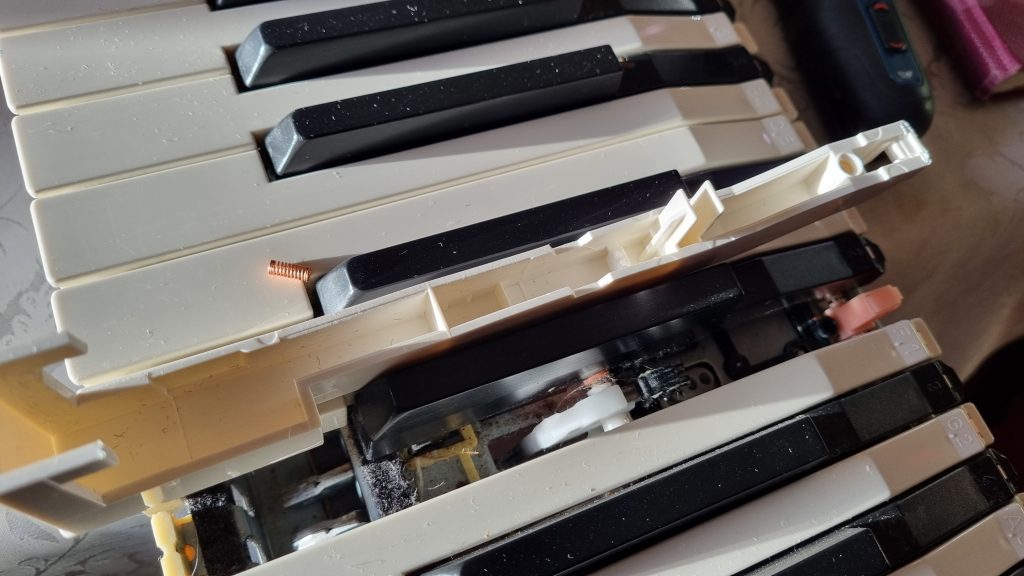
Three keys were also found to be physically broken (and one missing entirely!), most of the keybed action securing screws were missing so the keybed was flopping about.
Made a note of the issues key by key – about 14 keys needed attention – as well as the full volume ones, some didn’t play at all.
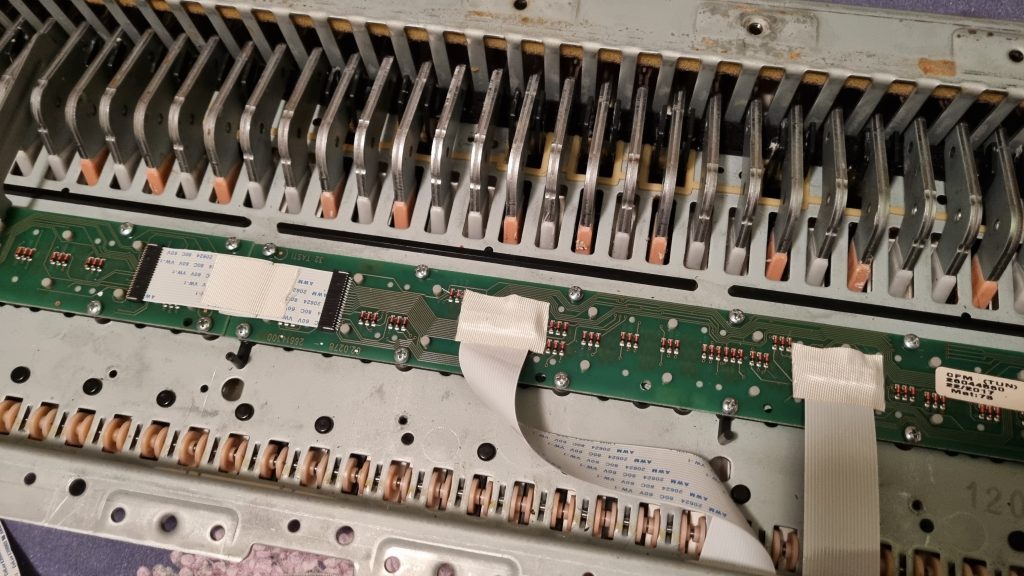
Unfortunately looking inside wasn’t much better – opened the case to see some evidence of someone not really knowing what they’re doing – damaged FFC cables, lots of missing screws securing the contact boards etc.
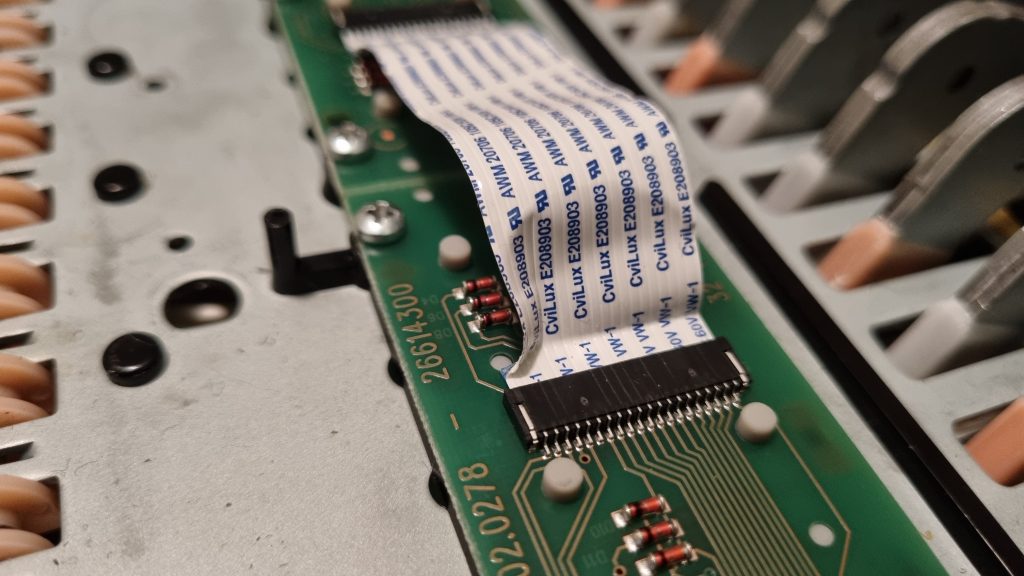
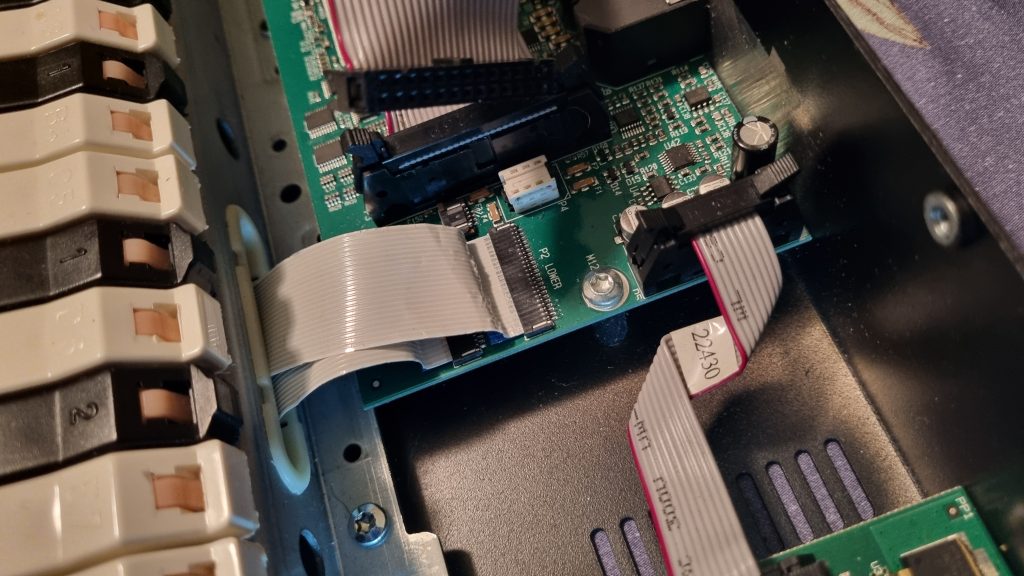
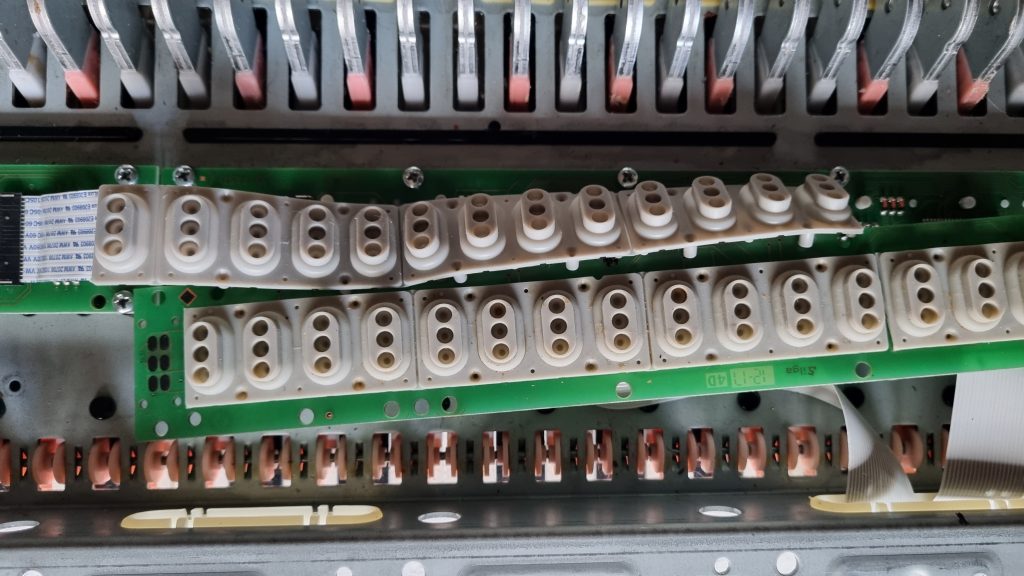
Extricated the contact boards and rubber contacts showing the stepped design (the slight time difference between the three contacts being pressed determines the velocity), and on this keyboard it has a factory calibration memory via a jig that presses all keys down simultaneously to provide a timing reference to even out any slight variation, stored on an EEPROM (which was also missing, so came up with a memory error on each startup!)
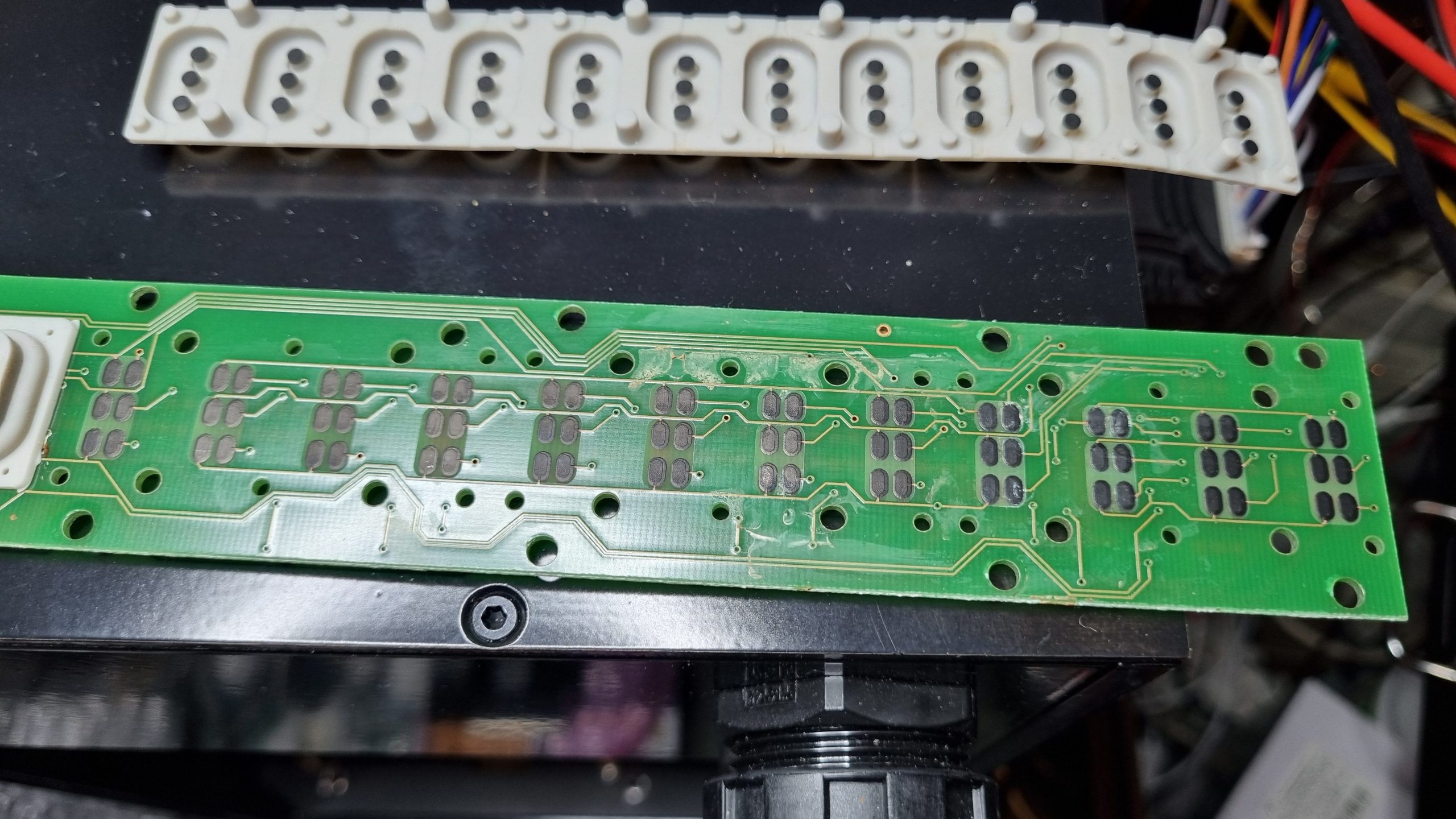
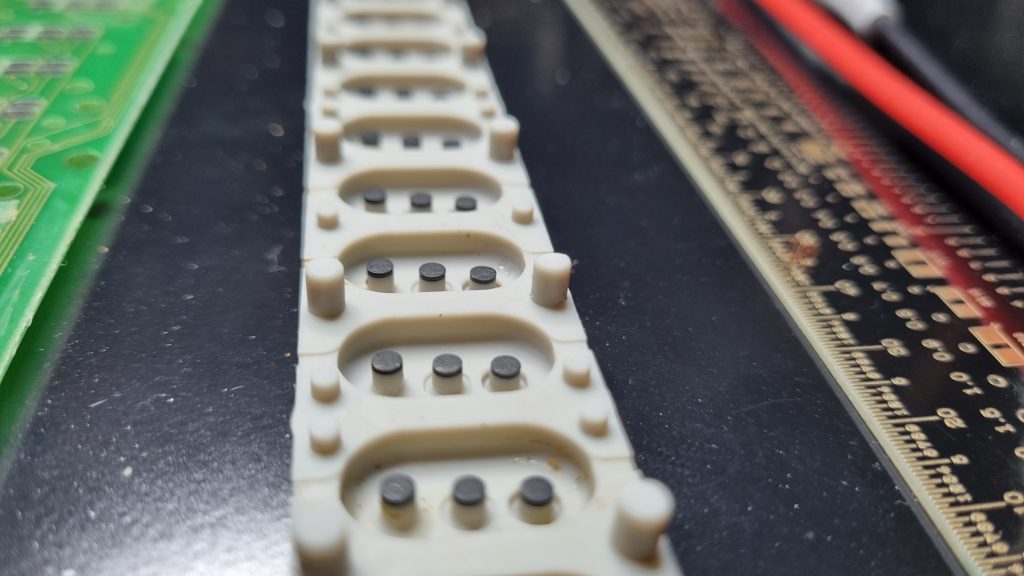
Can see some crusties (spill damage remnants) on the PCB – normal cleaning solvent didn’t do much but this responded well to a mild alkaline cleaning solution suggesting it was an acidic drink that was spilled and had actually etched away some of the carbon pads.
A couple of the blocks of contact strips were installed upside down, that explained the full velocity keys, but not the others, and the very end key was also missing its contact strip.
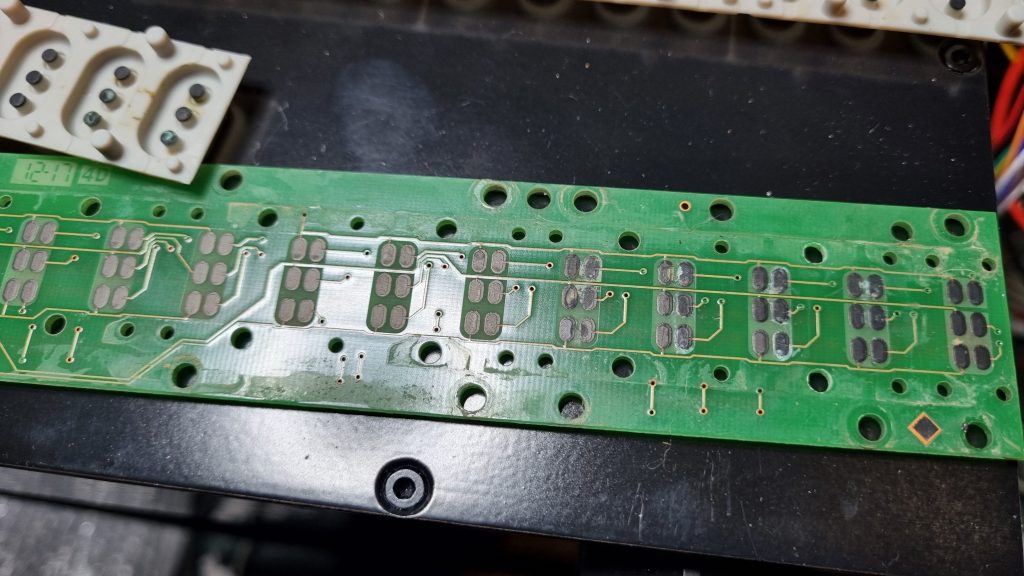
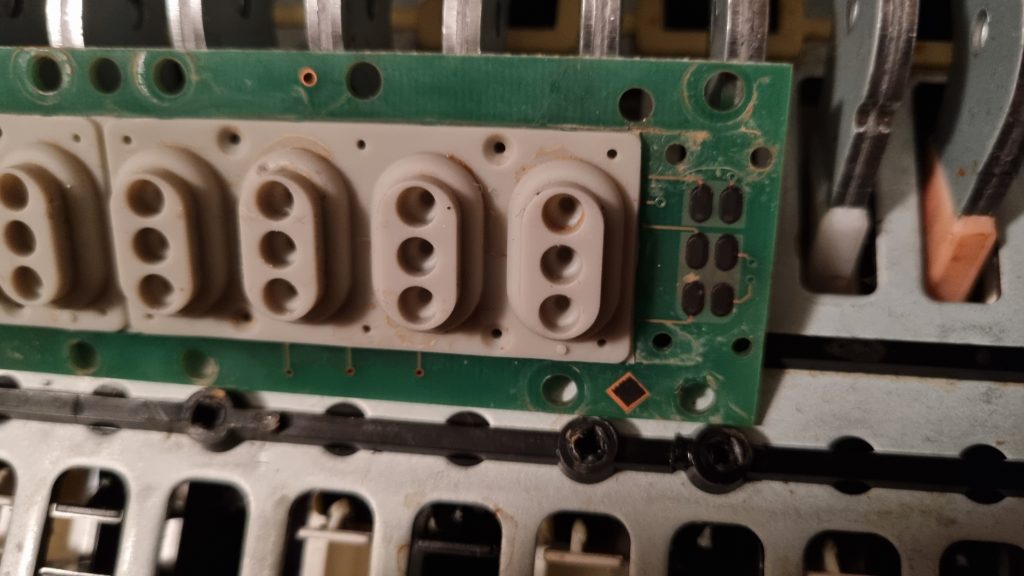
The acidic content of the spillage had eaten through a few traces and pads so these were restored with MG carbon conductive paint (expensive but good), that fixed the missing keys and ones that had half-velocity. My pen had somewhat dried up but a few drops of acetone restored the flow 🙂
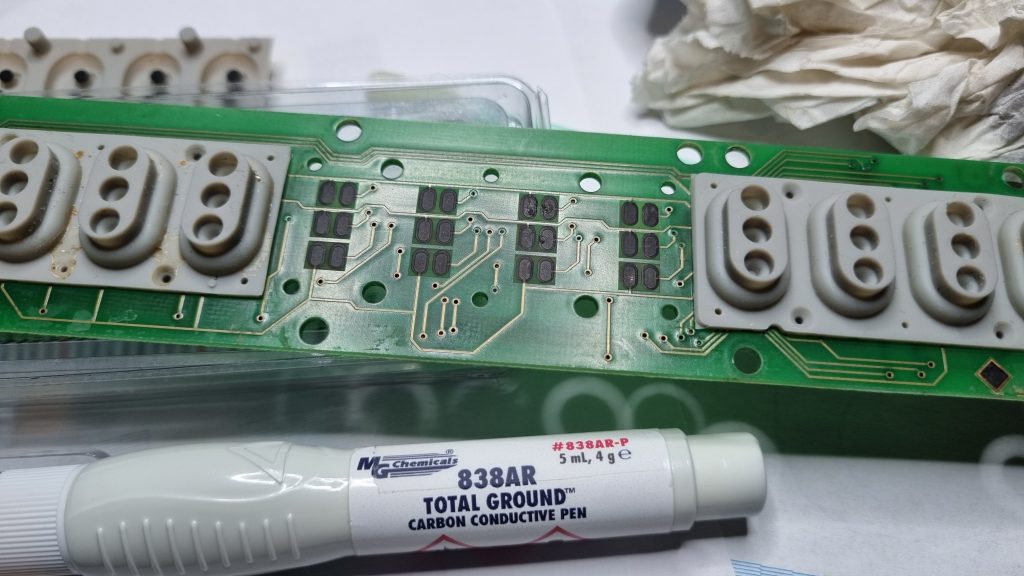
Precision grinder used to expose the copper track either side of the break and connection restored:
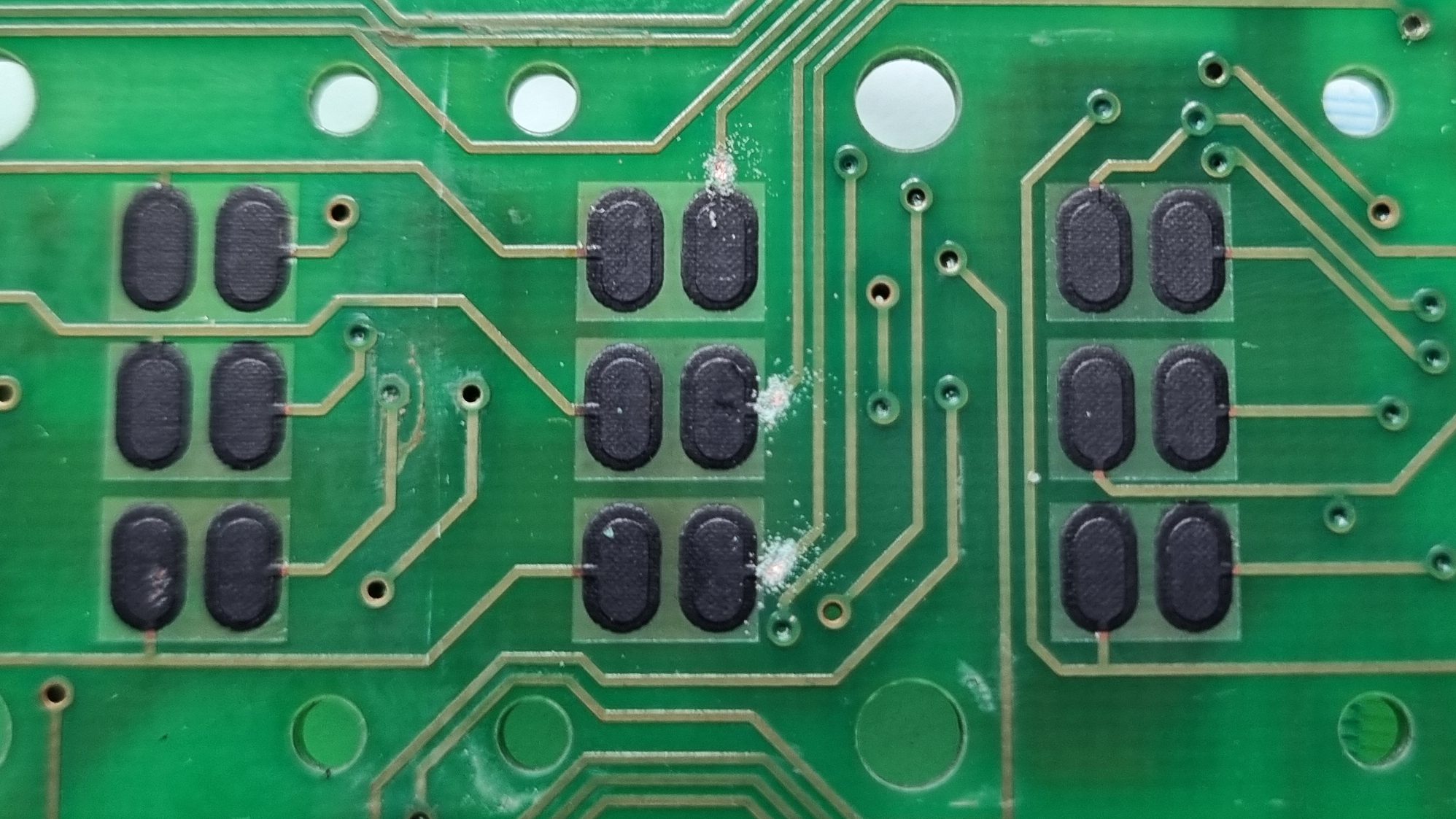
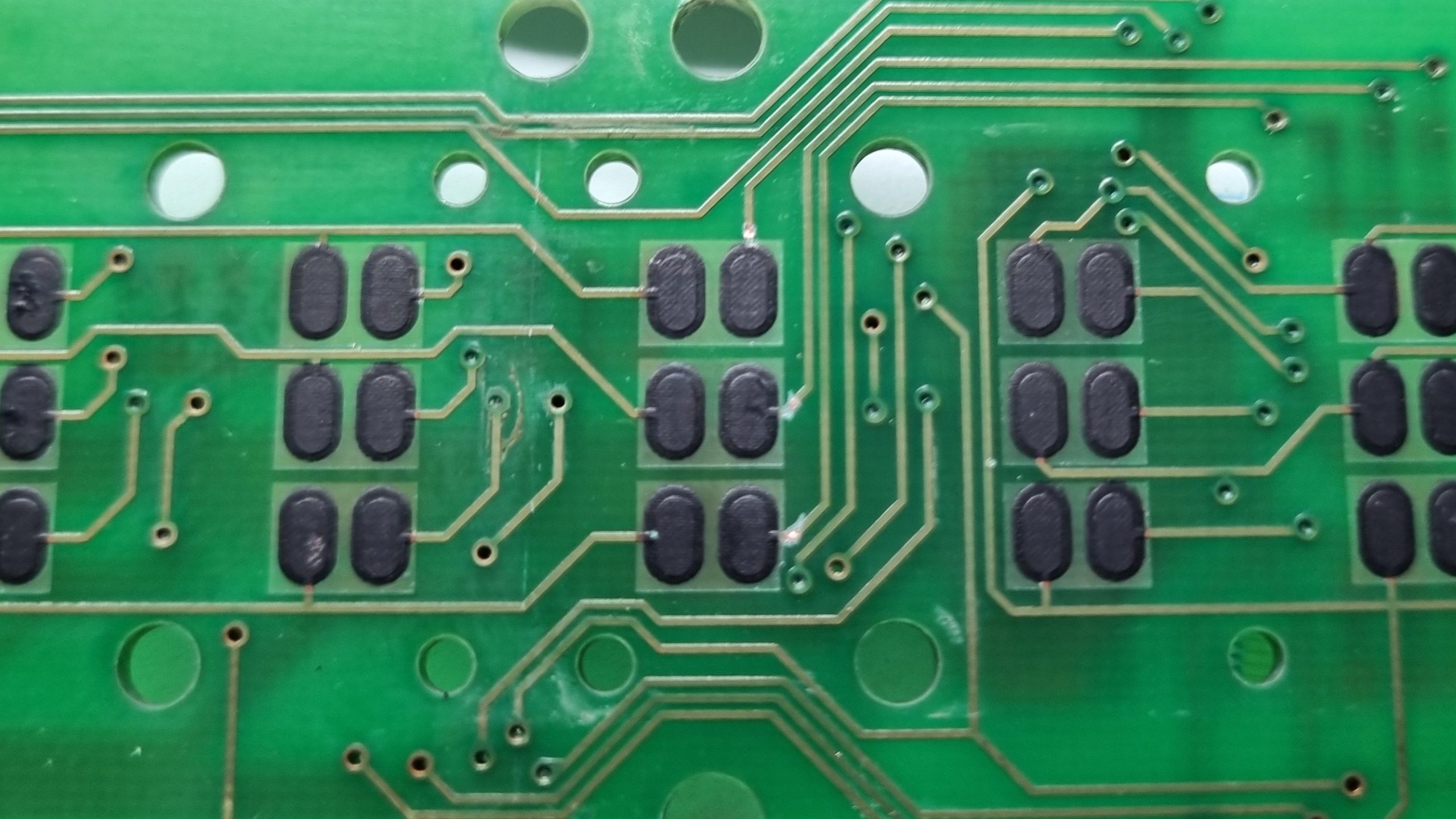
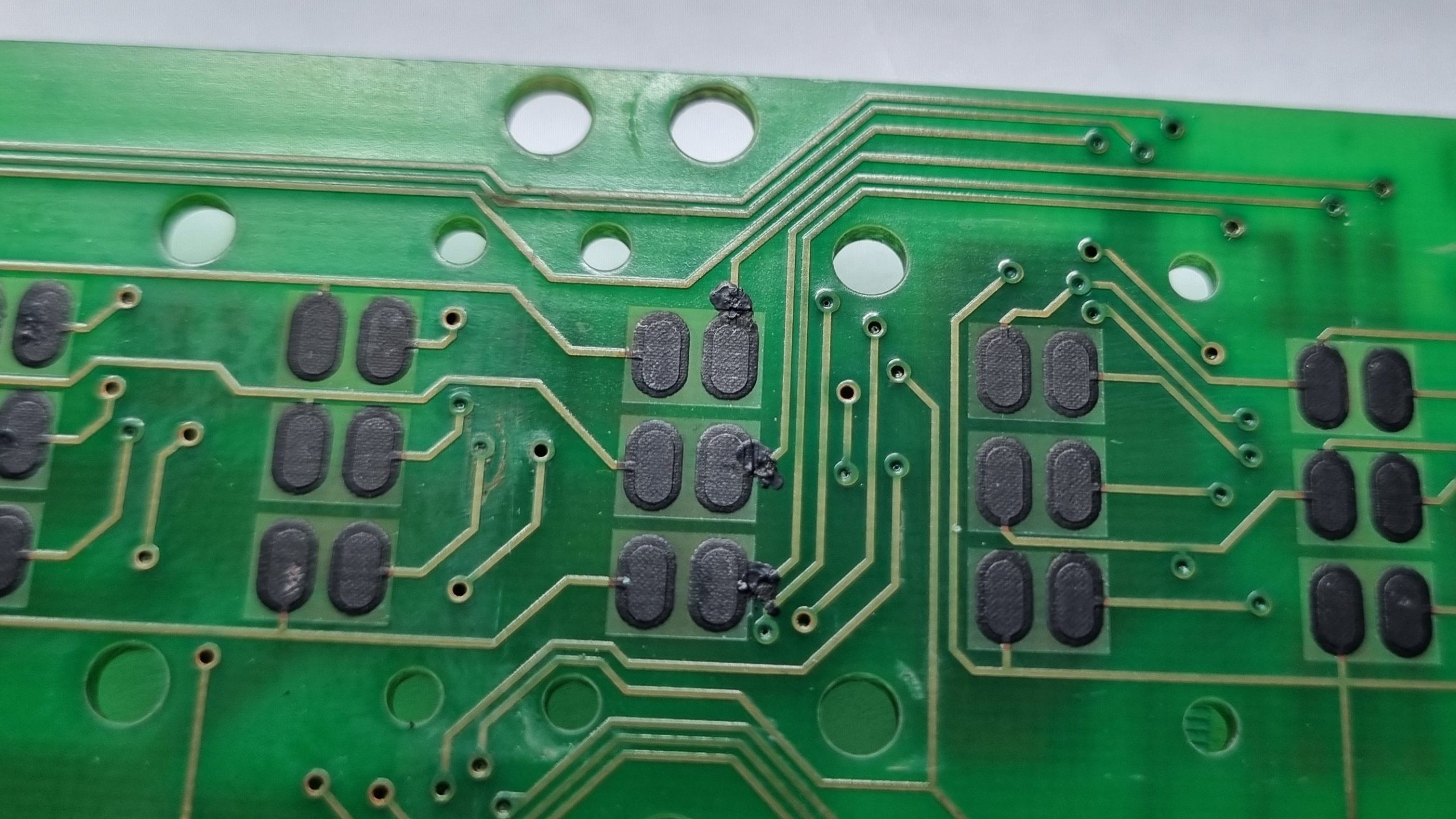
Same issue on a number of other keys, so repeated the process repairing traces until it was playing acceptably across the whole 88-key range.
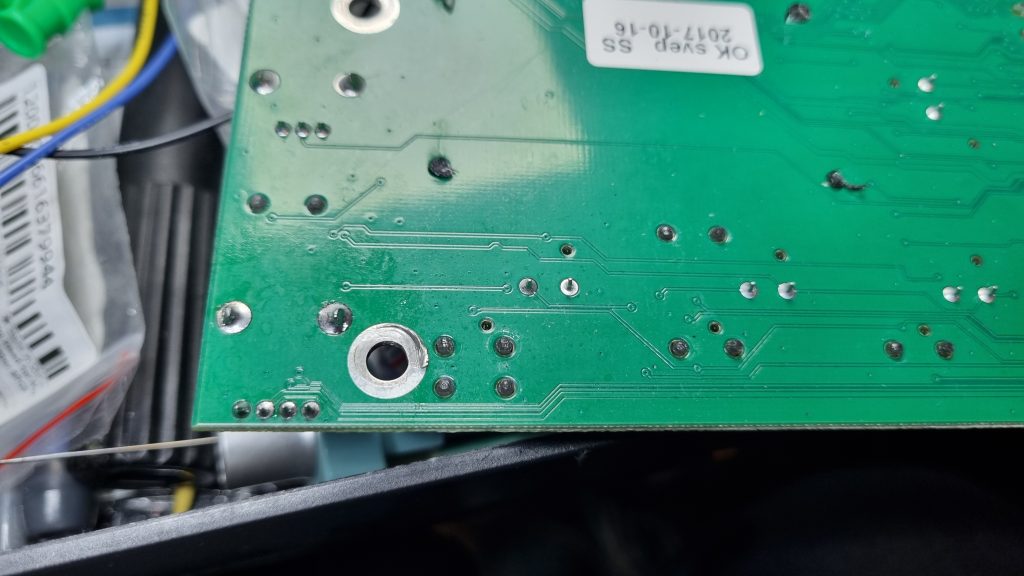
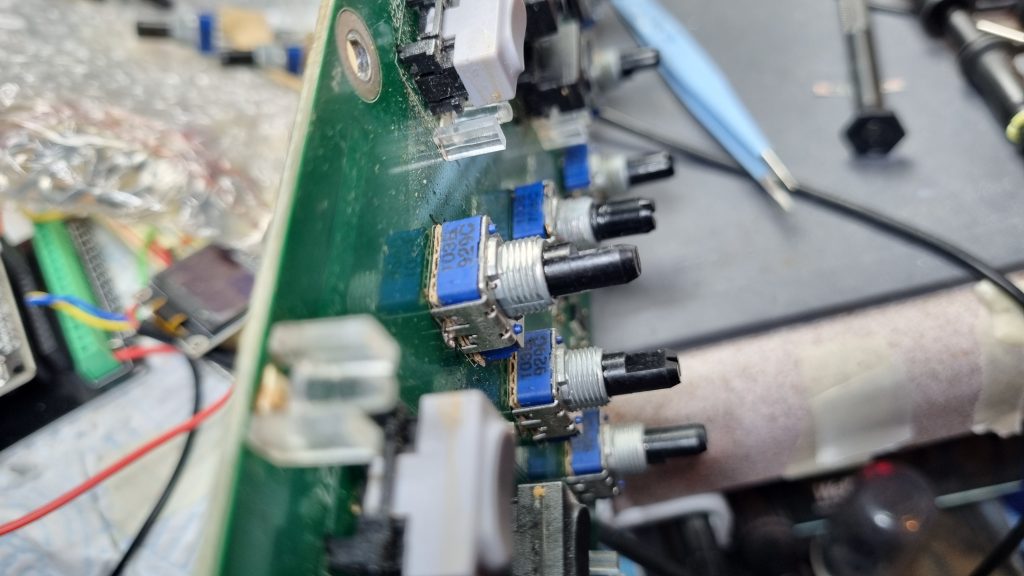
Then onto the damaged pots, most had the base pushed down (heavy item on top of them in transit??) leading to intermittent wiper connection, one shaft was snapped entirely 🙁 :
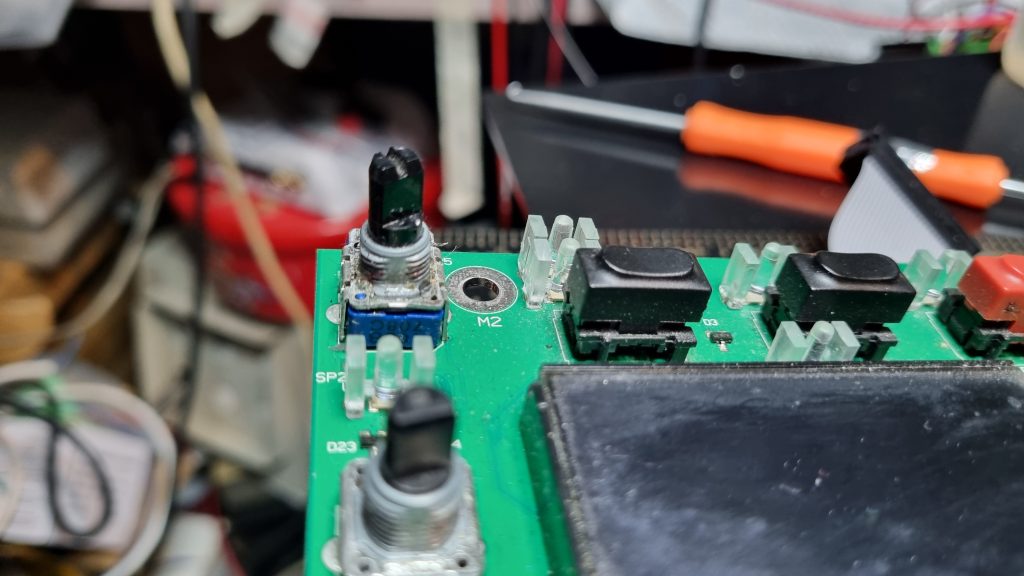
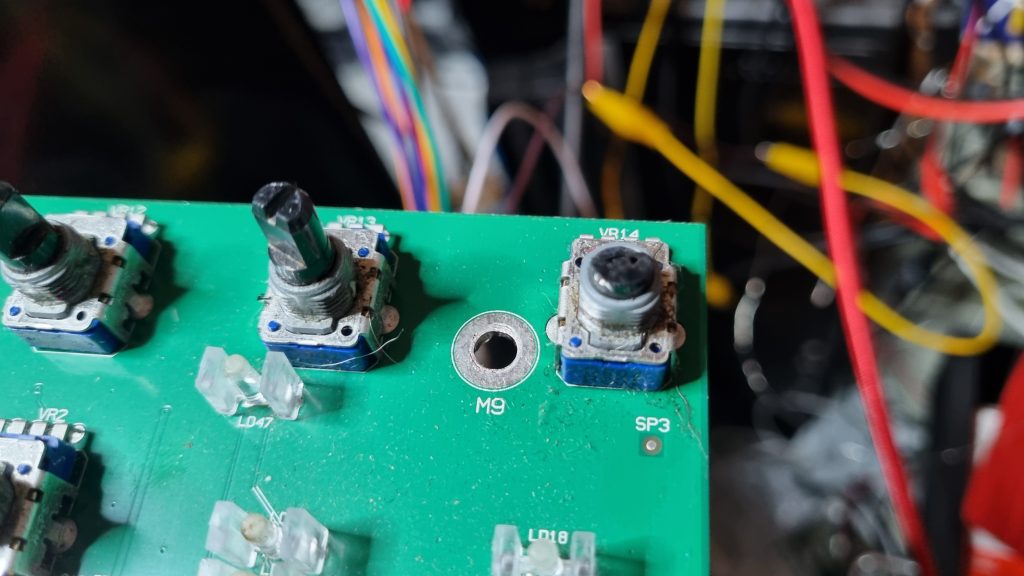
15 new pots were ordered (along with new knobs, 13 way contact strip and 3 replacement keys and springs)
Fitted new pots (these were very awkward to remove due to old lead free solder, even with the Weller DXV80, but with a bit of patience and help from hot tweezers on the press-fit lugs, it all worked out). Also cleaned contacts in the push button switches too as some were intermittent.
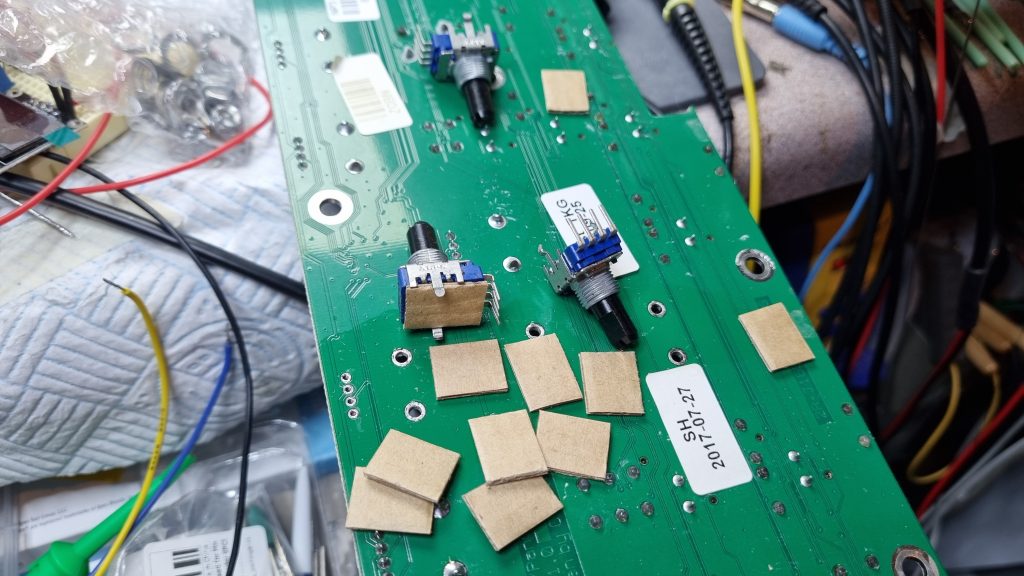
Little card shims were placed under each pot to help guard against ‘pushing out’ in the future.
Not sure why ALPS designed them this way, if the blue plastic body was a little longer to the same depth as the metal housing this failure couldn’t happen.
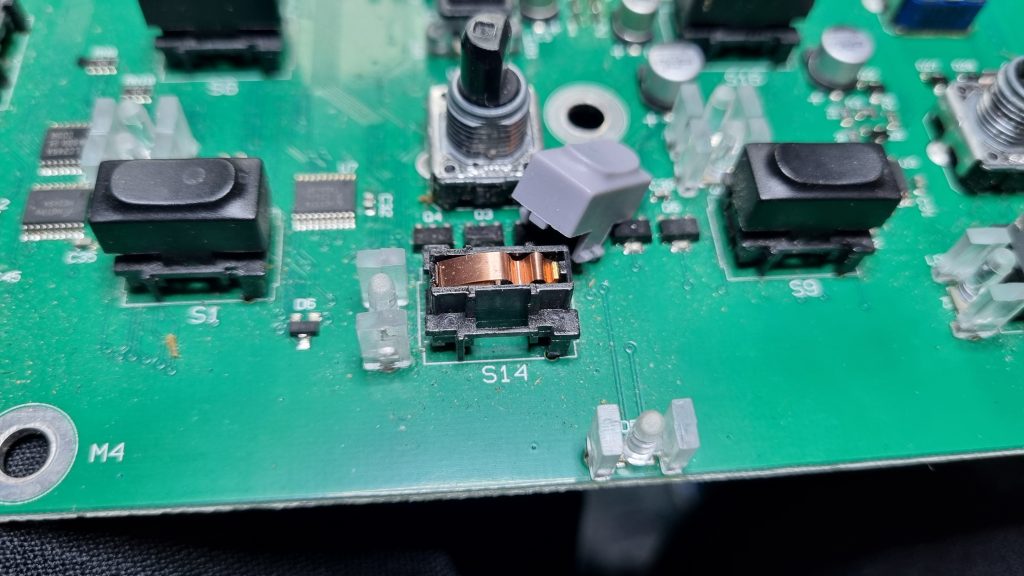
The missing key and spring was refitted (with a bit of moly EP-30 grease where needed)
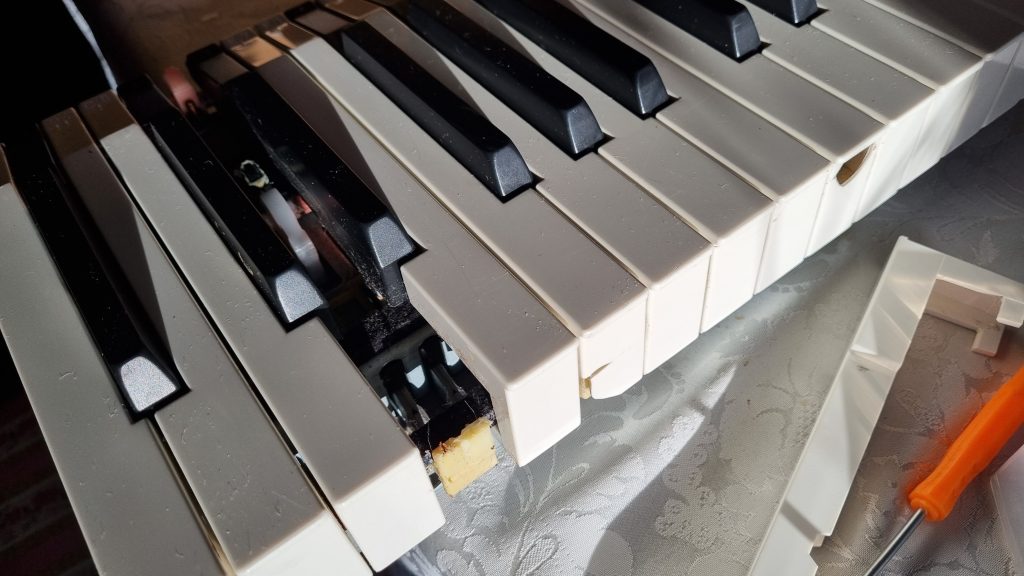
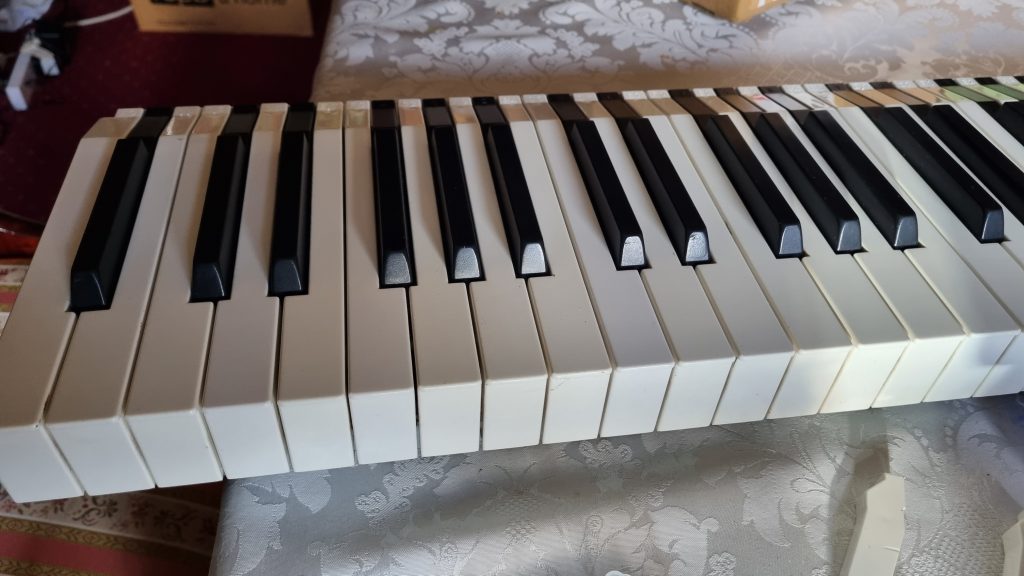
3 other keys replaced, looking better, also gave the keys a clean! And 13 way strip to replace the 12 way at end and hence provide the missing contact pad:
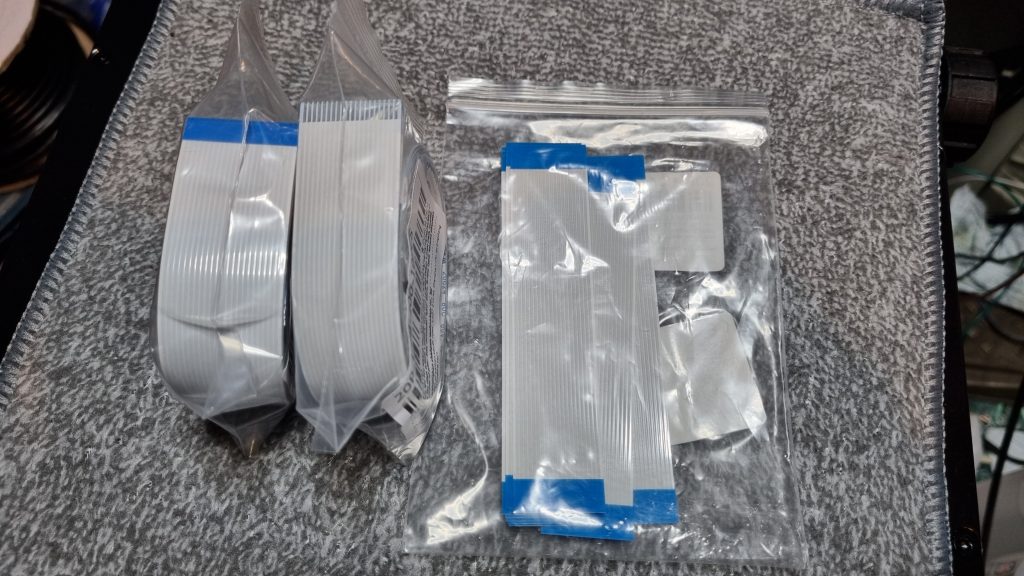
New FFC cables arrived and fitted and secured (a tiny bit longer than the originals):
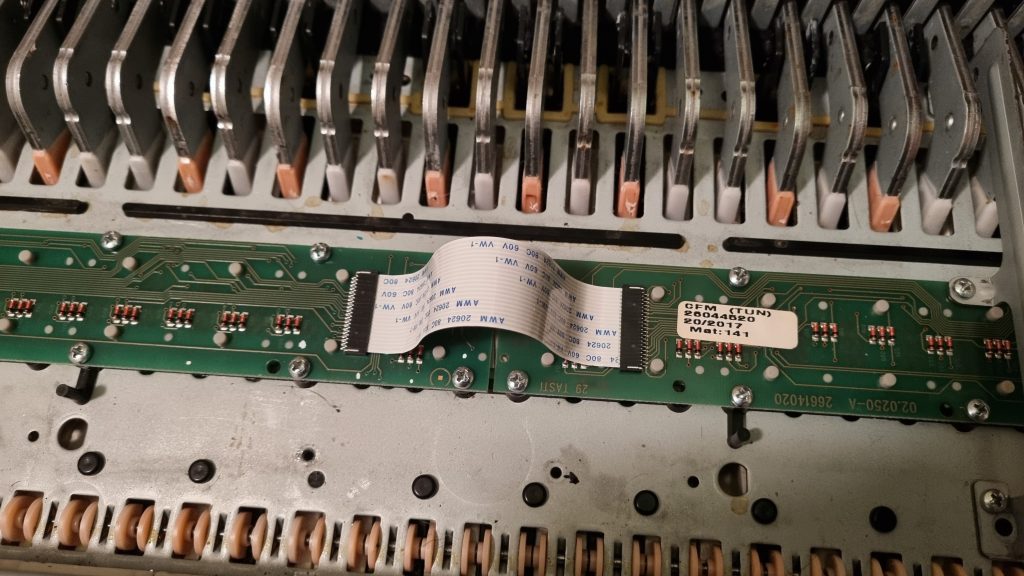
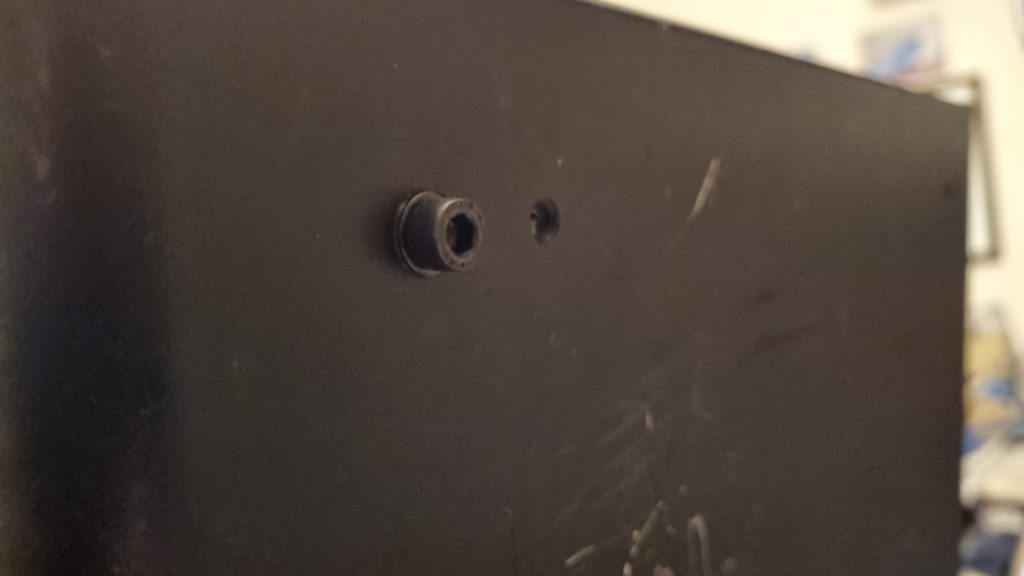
Several new hex head screws were fitted underneath to secure keyboard in place to chassis. Keyboard functions nicely now, very nice action and sounds (including one of the best Wurlitzer amped sounds I’ve ever come across).
Front panel refitted and new knobs installed:
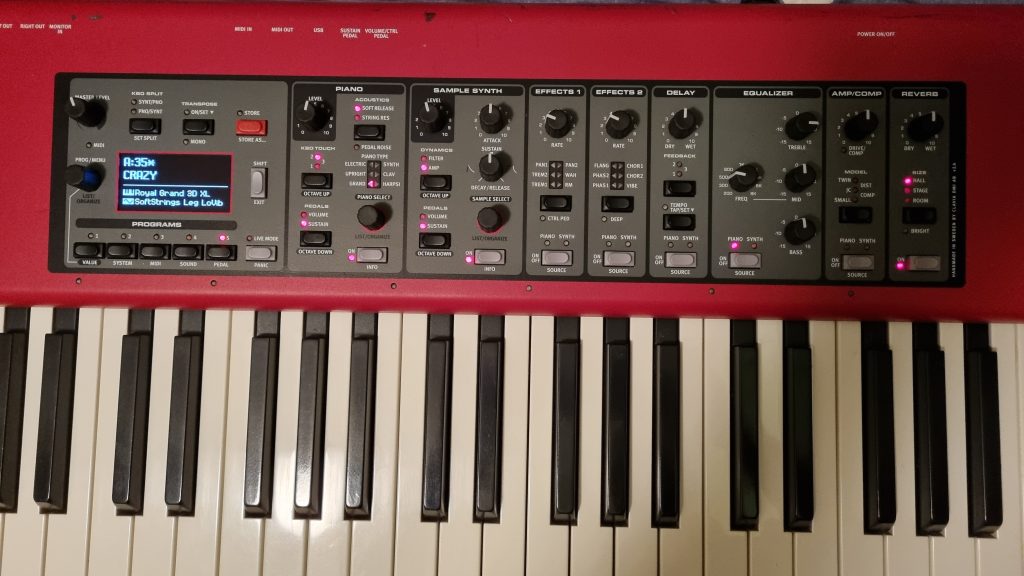
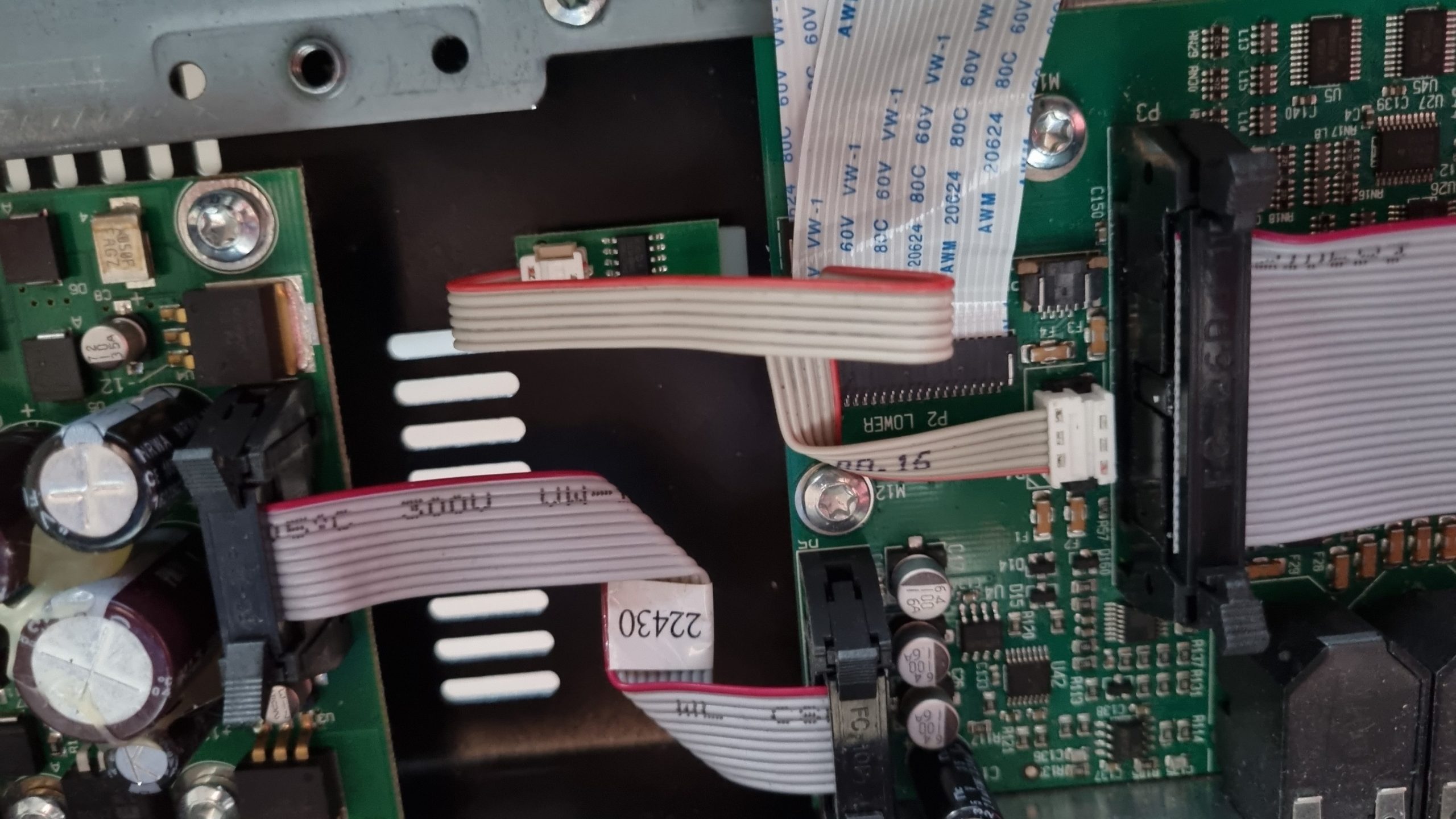
Then to deal with the error on startup due to missing calibration memory which connects to P4 below (the cable for this looks like it got ripped out of the socket it connected to on the mainboard given the remnants of the cable inside, photo was before FFC replacement too!):
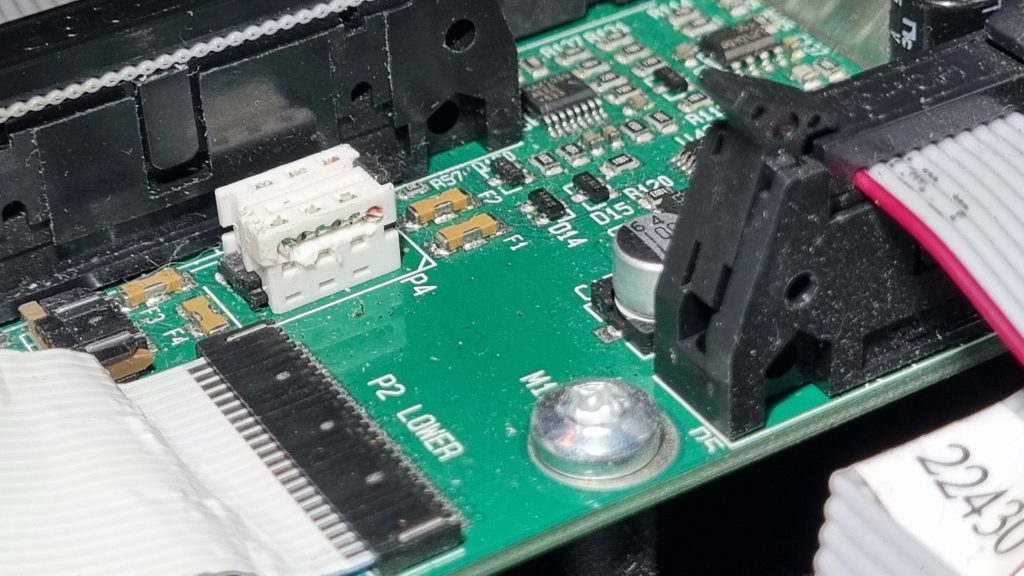
Customer later found the module and returned with it to complete the puzzle. Unplugged the connector from the board – unfortunately this “crimp” IDT connector is quite unique and needs a proper tool to install a new connector, so managed to carefully prise each IDC pin out to release the remains of the cable:
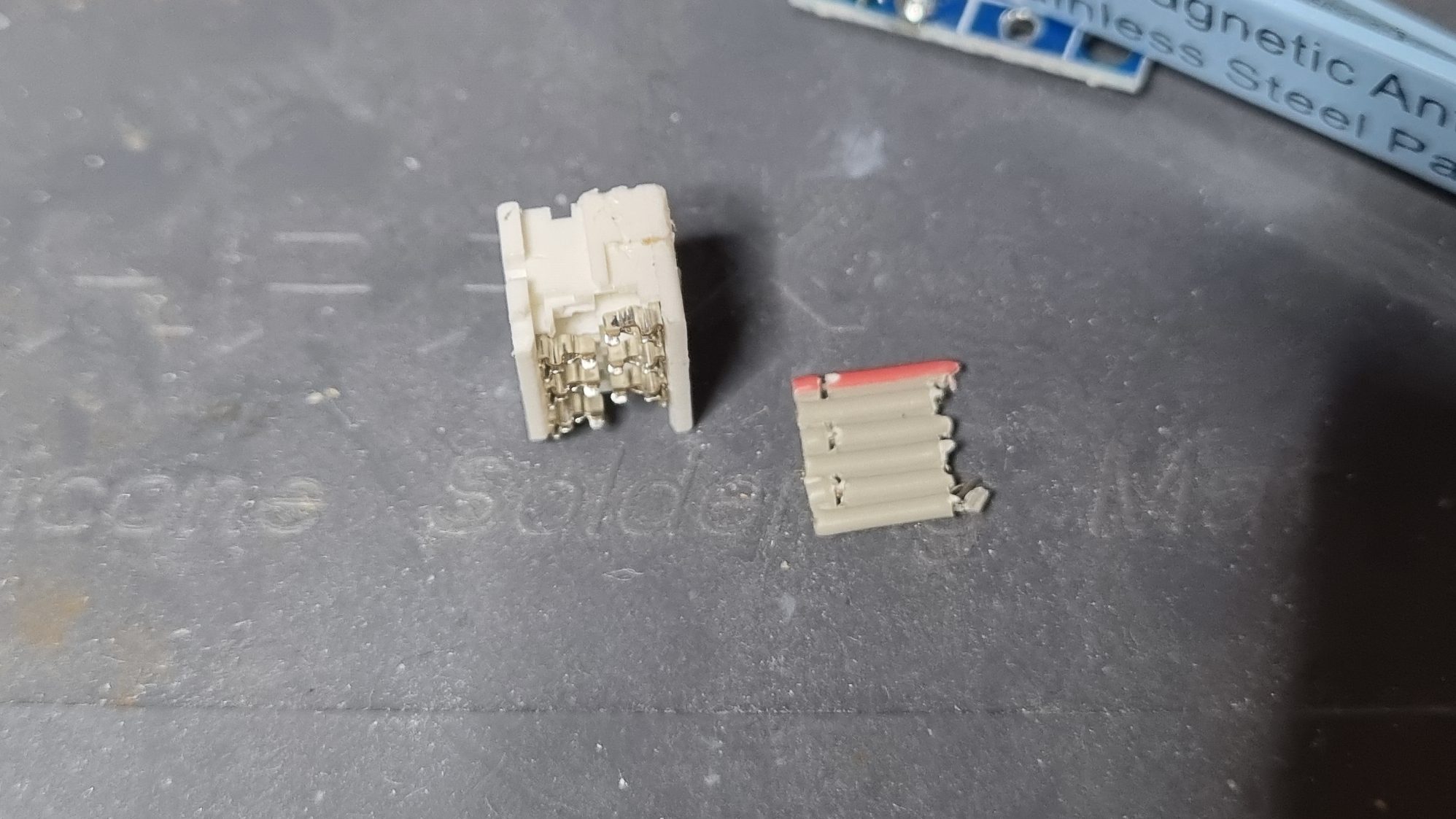
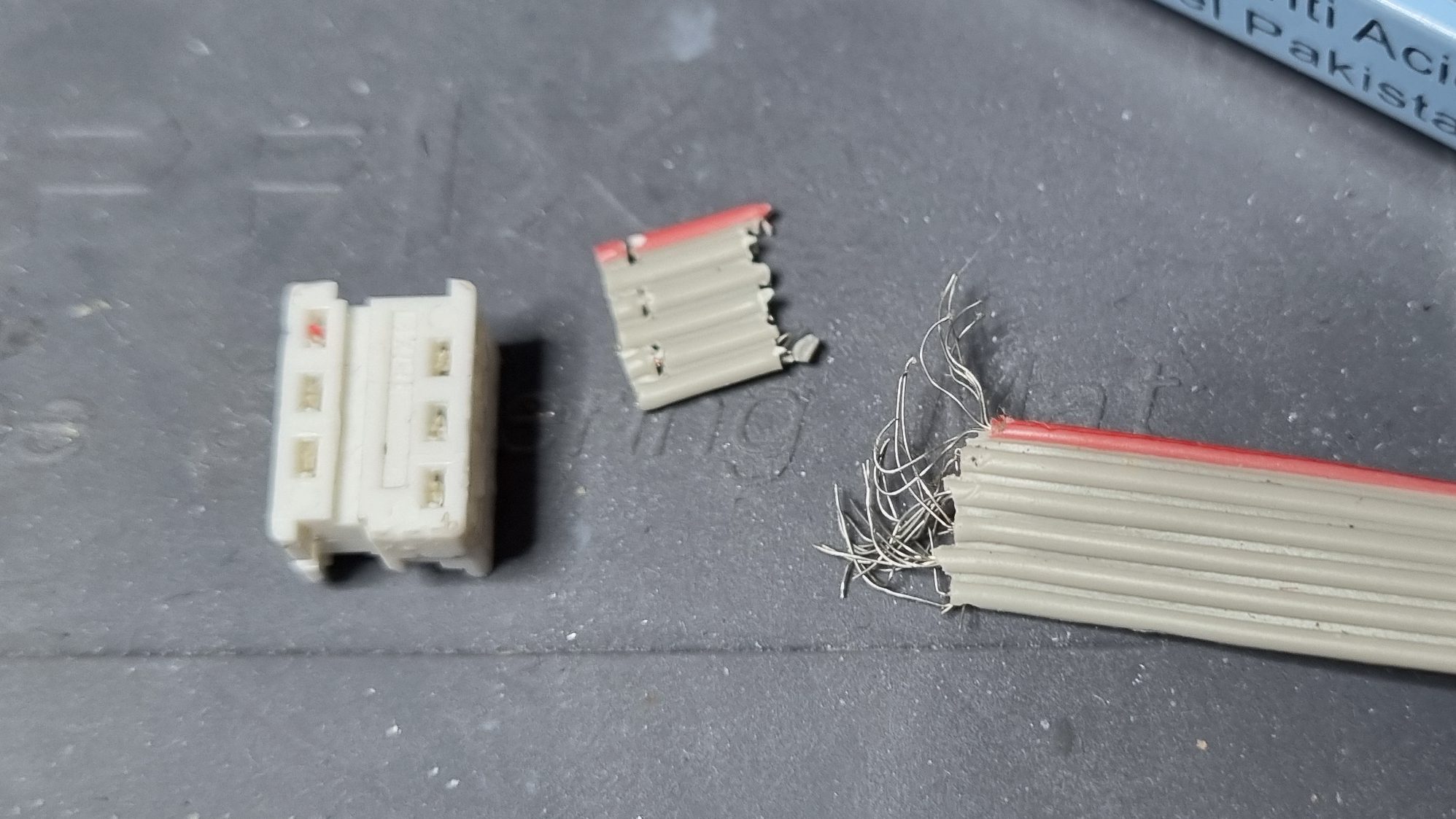
After flush-trimming the ribbon cable, inserted into the connector and push the pins individually back to make the connection to each wire, and secured back in place (not the usual location in the action, kept it adjacent to the board).
No more power up error and keyboard still responded well! I also took a dump of the eeprom in case any future tweaking was needed (although don’t know the encoding used – probably would need to pluck hen’s teeth from Clavia to get that info!).
After this, some new screws of the appropriate lengths were fitted to the wooden end panels to complete the case fitting and customer was made up with their keyboard back to sounding as good as new – and was also advised to get a proper flight case for it!