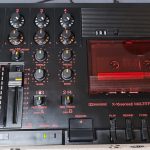
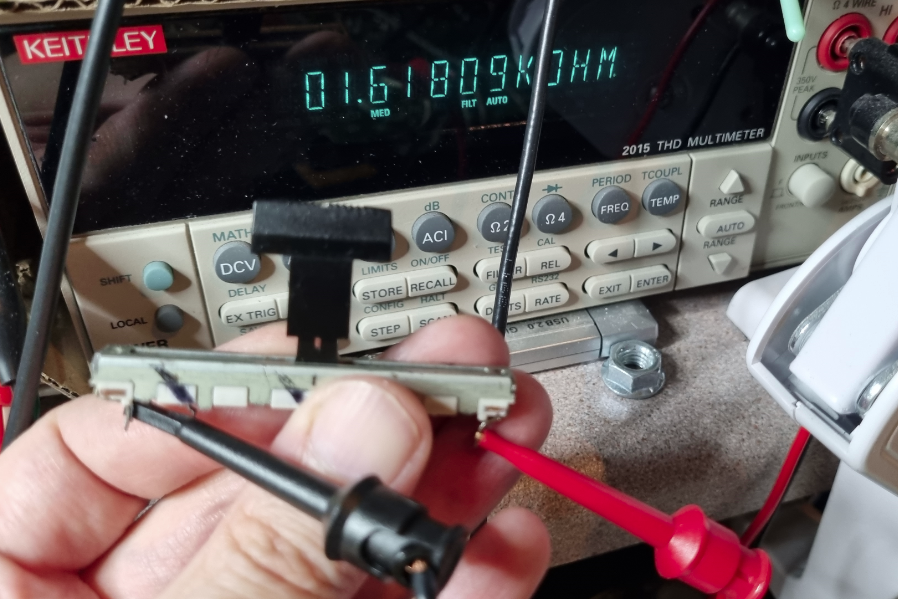
Reported issues: This Tascam unit had some recent work done on it, and has bad W&F, pitch control broken and half-fixed, can this be improved upon… Thankfully the original fader (3K linear) was supplied as well as the old belts that had been replaced.
The deck had a non-original switch-mode PSU but this was ok.
Initial testing of the Porta Two
This showed extremely poor W&F measured at 0.42% peak, and a 2nd run was worse, never below 0.4177% WRMS and Quasi Peak 1.35%!
Speed WRMS WPeak
3134.4 0.5692 1.1338
3132.3 0.5954 1.1539
3131.9 0.7124 1.3562
3133.3 0.5303 1.3562
3135.1 0.4474 1.3562
3130.6 0.4177 1.3562
3136.0 0.5357 1.3562
3128.2 0.5879 1.3562
3132.3 0.6018 1.3562
3131.2 0.4979 1.3562
Opened up, was a musty smell inside, perhaps stored in a garage unused for a while.
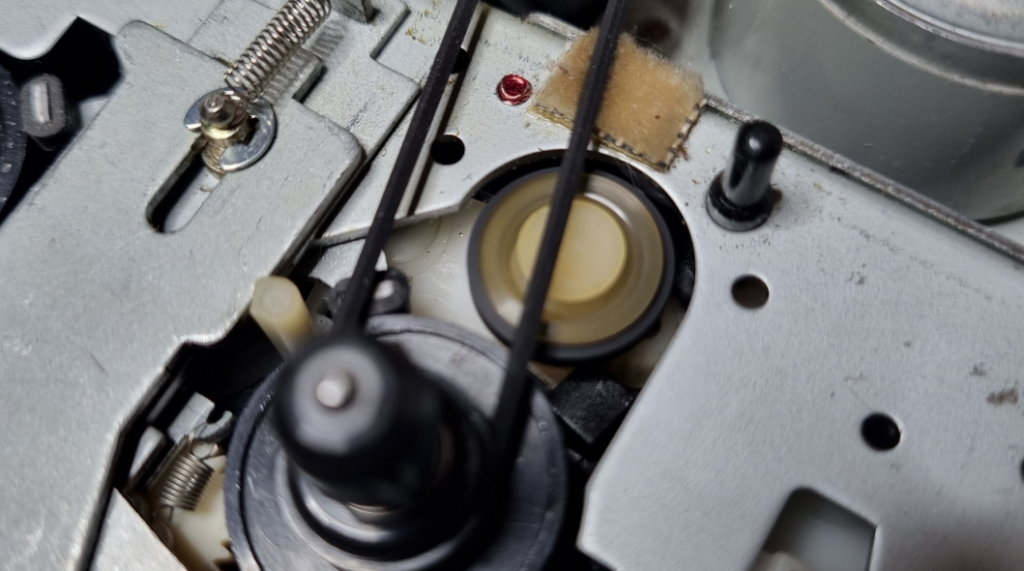
Pinch roller was aged and dinted, a primary cause of major W&F. This was replaced:
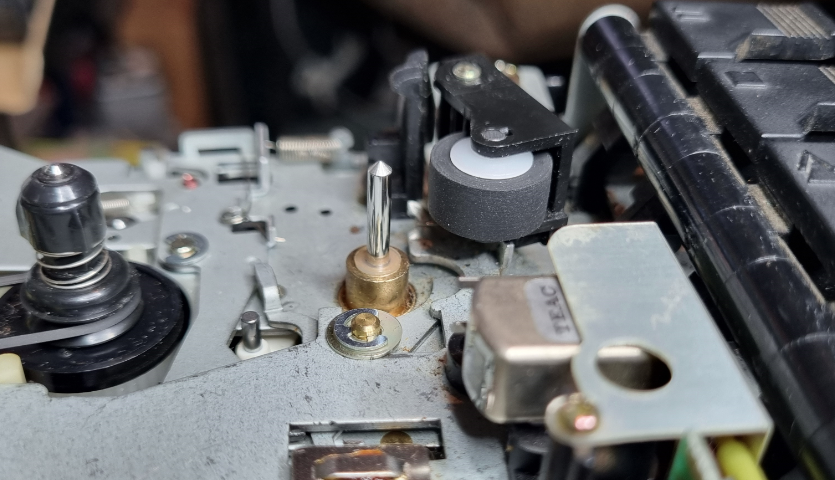
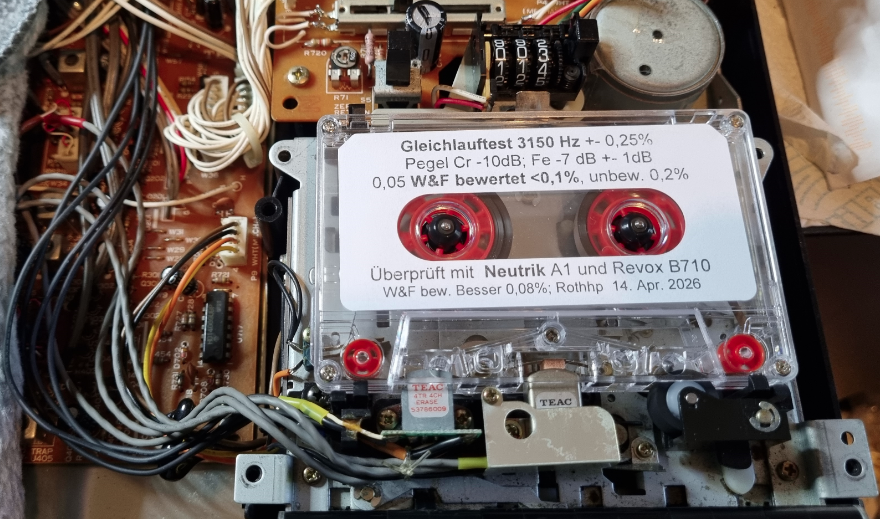
After replacement, W&F down to 0.22% at minimum, but still too high and peaks over 0.73%
3143.3 0.3059 0.7362
3144.2 0.2268 0.7362
3140.2 0.2811 0.7362
3140.5 0.3307 0.7362
3140.8 0.3040 0.7362
3140.6 0.2925 0.7362
3143.7 0.2656 0.7362
3141.1 0.3212 0.7362
3143.3 0.2651 0.6819
3144.0 0.2393 0.6819
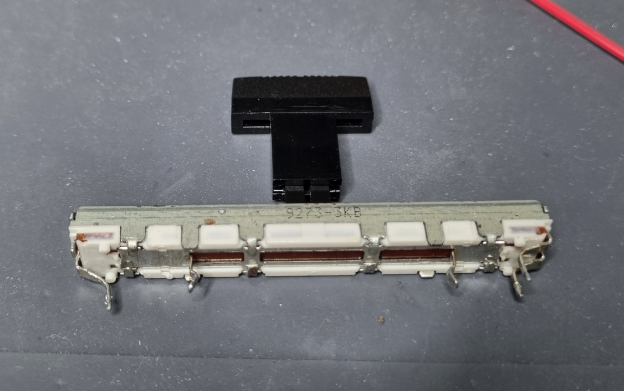
Found a previous tech had put a smaller 45mm (30mm throw) fader value 10K in there which isn’t particularly acceptable, no centre detent etc (should be 3K linear 60mm (45mm throw)).
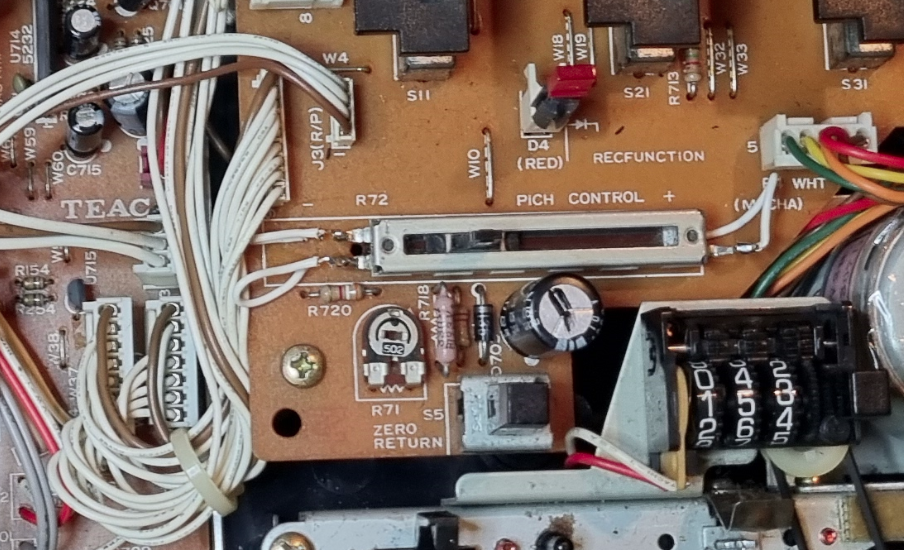
Fixing the mechanicals
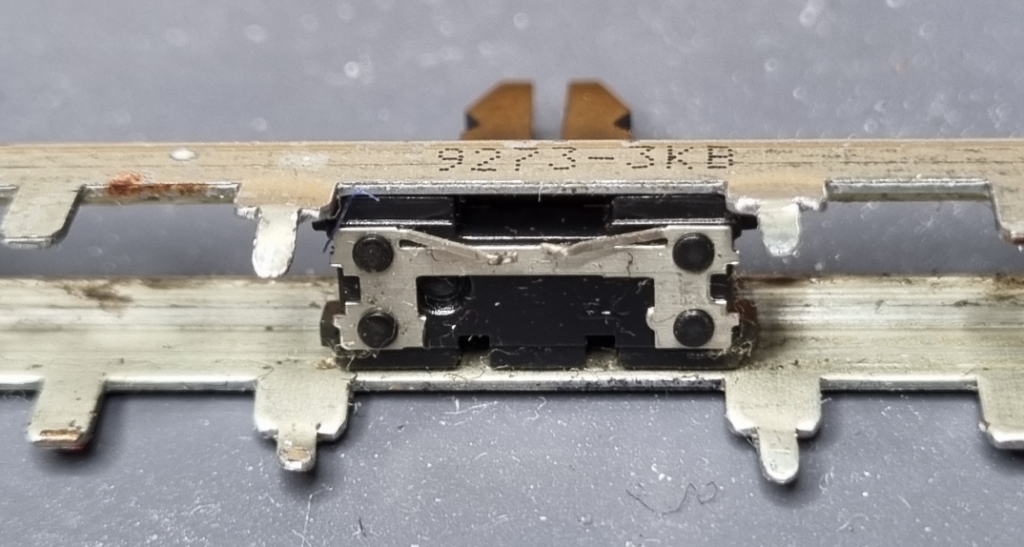
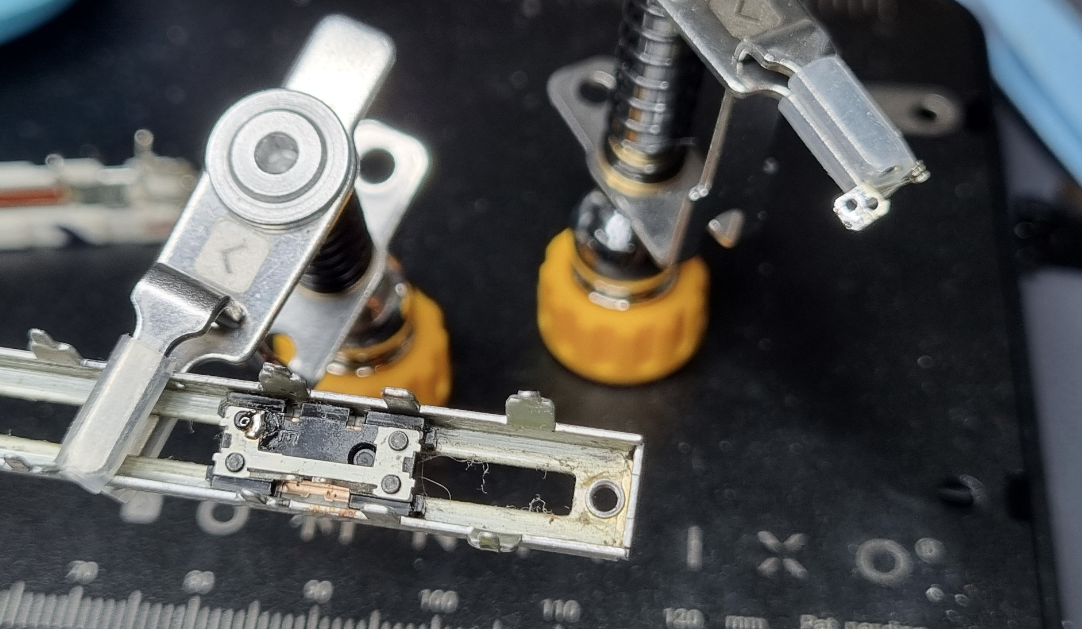
The original slider was opened (had been opened up previously), and slider contact was broken off and missing. Ordered some spare faders of similar dimensions to cut out a donor contact to maintain the same slider and button interface…
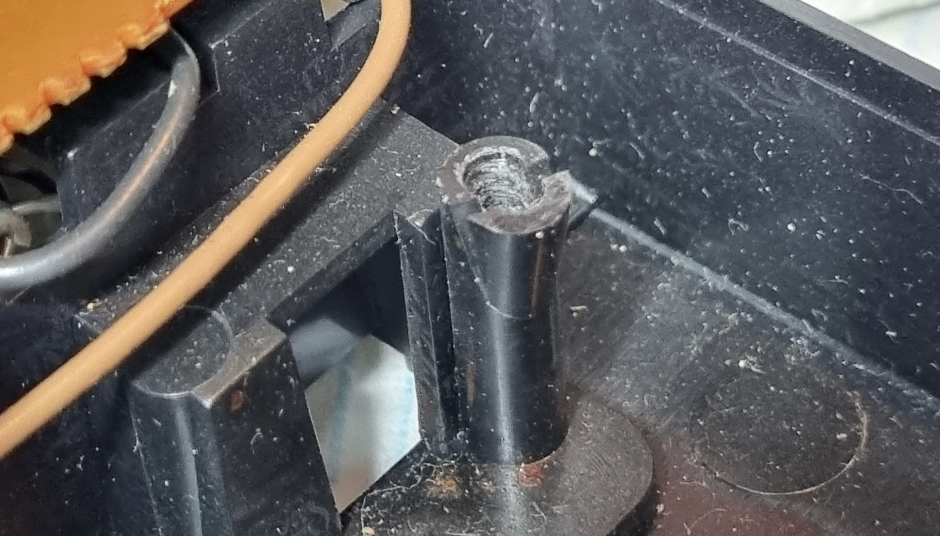
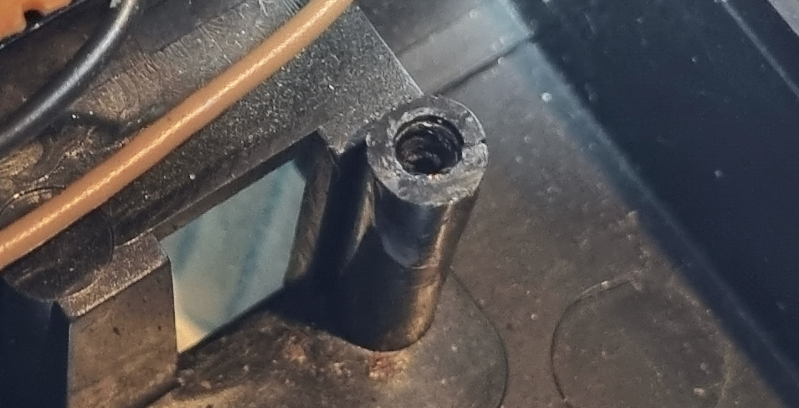
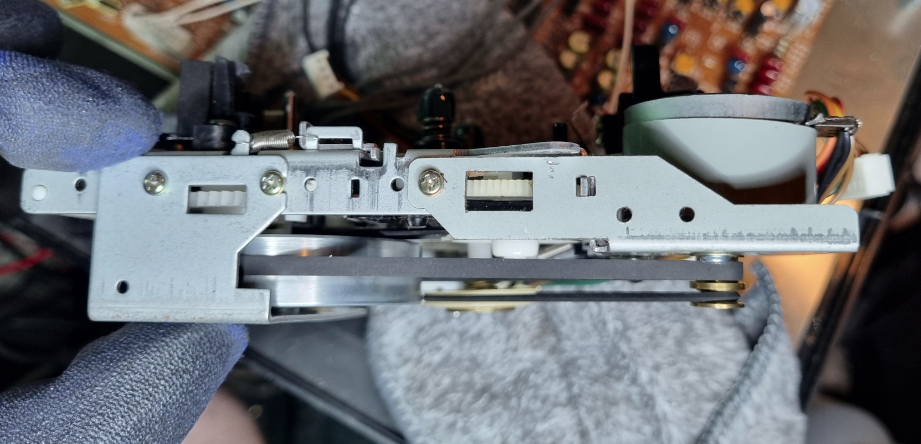
Also found transport mech chassis bent (probably from a drop) – motor at an odd angle and belt rubbing on metalwork, plastic mounting post split/broken, more evidence of rough handling in the past.
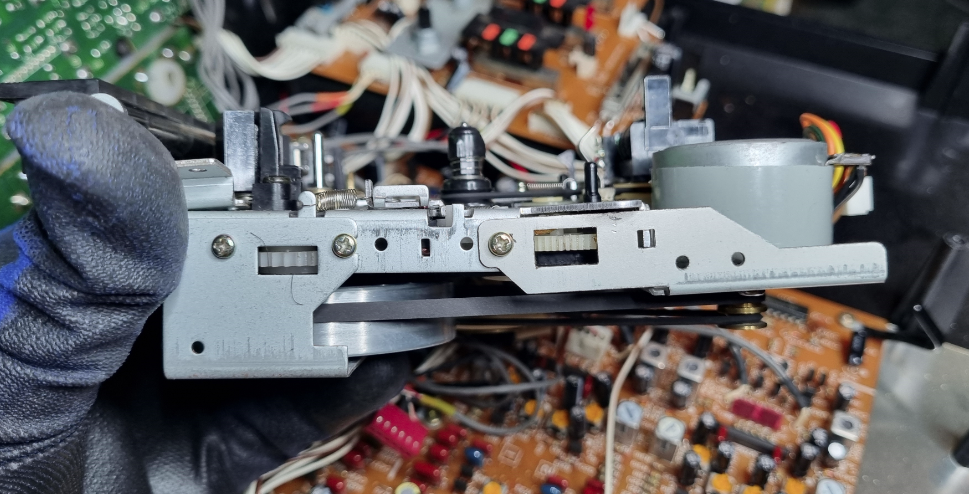
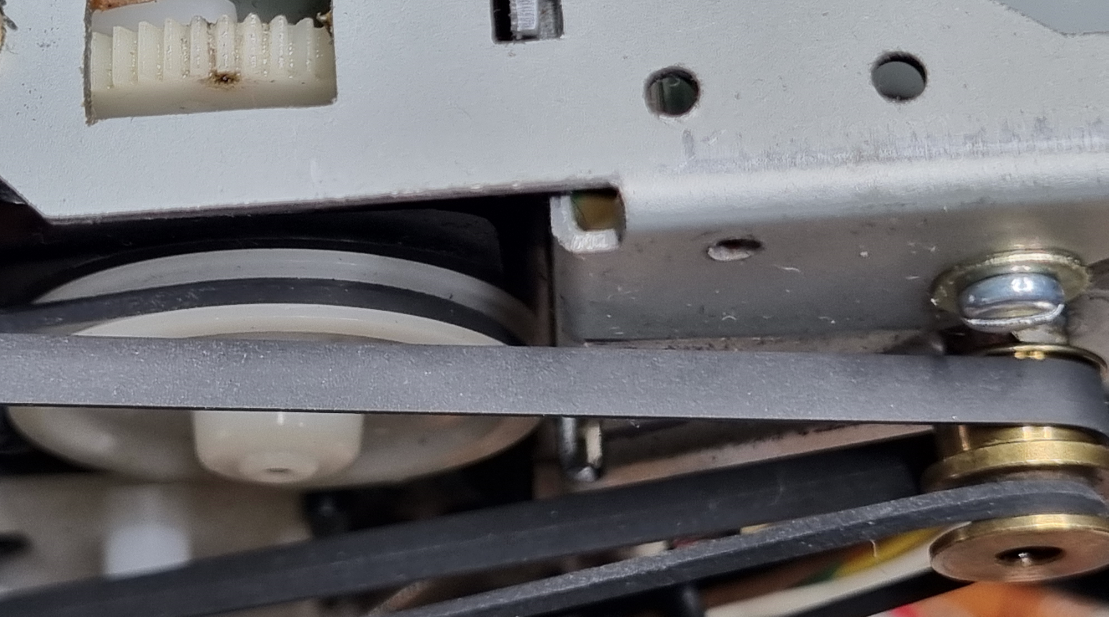
More bent metalwork on the transport buttons to straighten out:
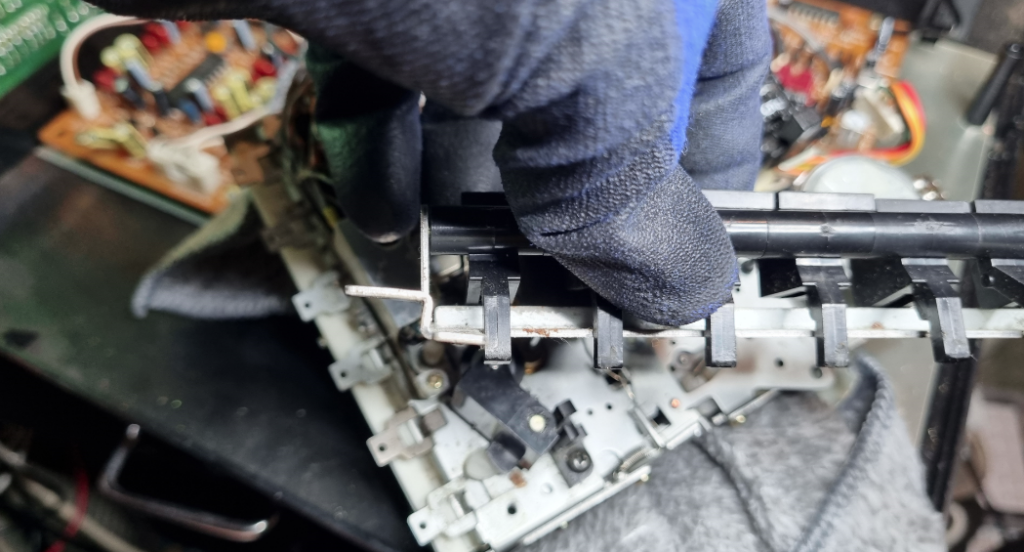
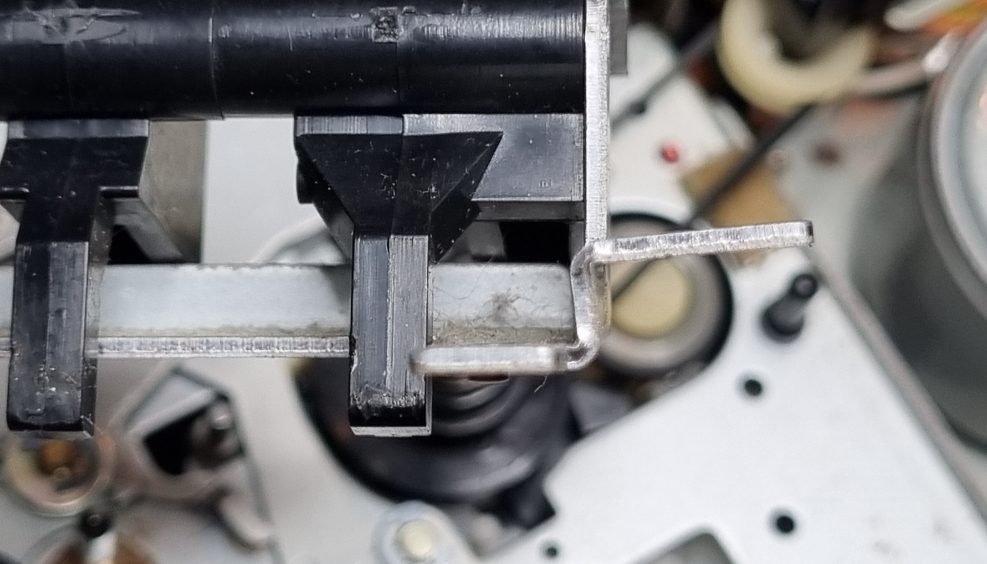
Repaired the split post with some ABS cement and reshaped the transport chassis to regain straightness.
Cleaning up the Capstan drive system
Corrosion and lumpy residues gently removed from capstan motor and flywheel pulleys:
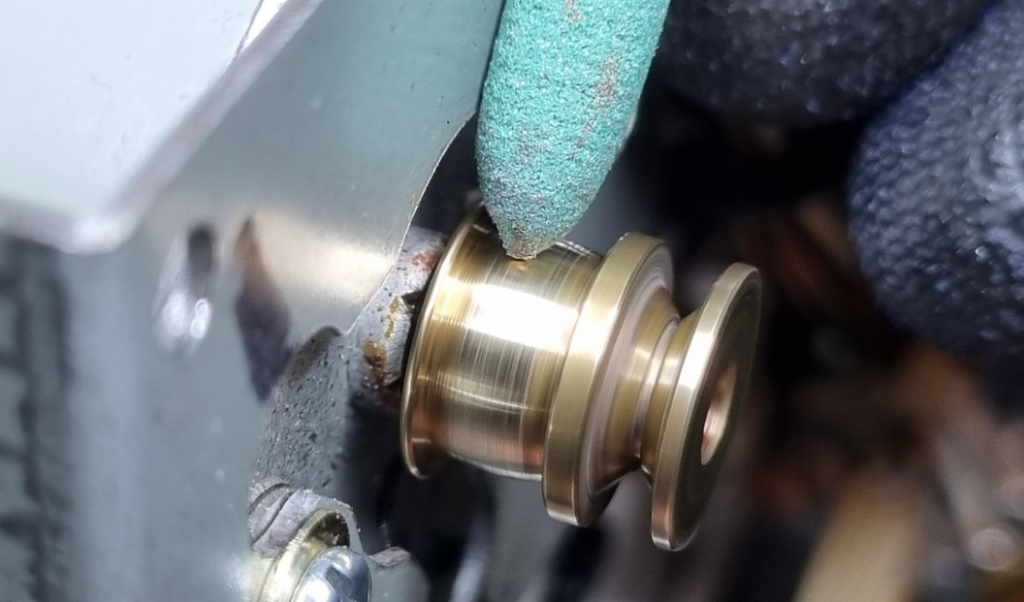
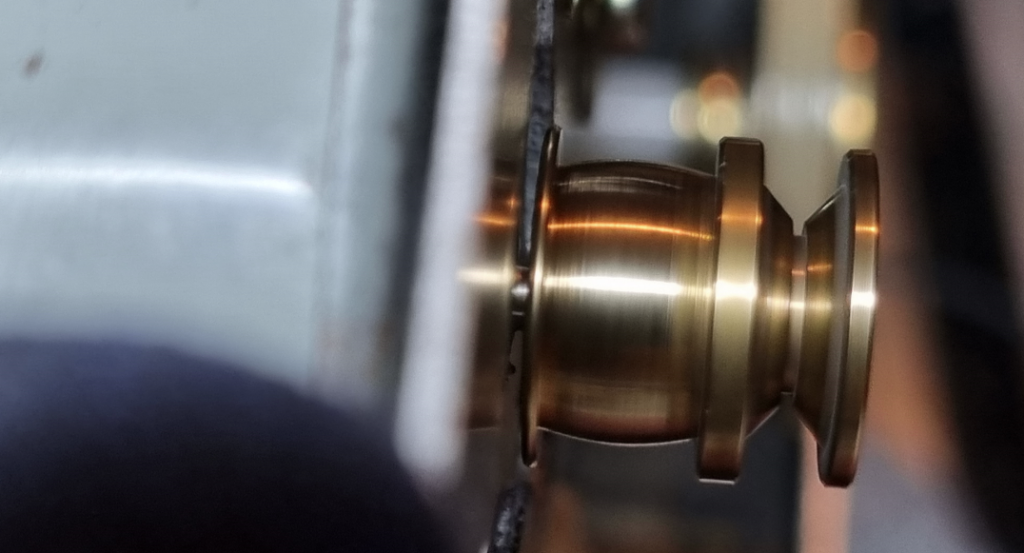
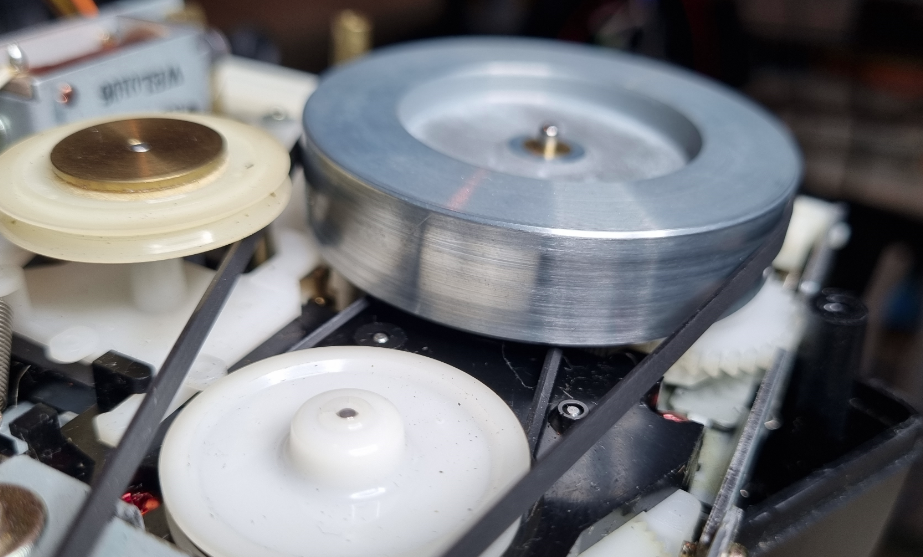
Further improvement to W&F after cleaning lumpy corrosion and residues off capstan motor and flywheel pulleys (peaks at 0.35%):
3154.1 0.1609 0.3498
3153.4 0.1677 0.3498
3153.5 0.1417 0.3498
3153.2 0.1212 0.3498
3153.8 0.1642 0.3498
3153.7 0.1631 0.3498
3154.8 0.1340 0.3498
3154.2 0.1573 0.3498
3154.2 0.1662 0.3313
3153.6 0.1496 0.3313
3154.2 0.1622 0.3313
3154.4 0.1842 0.3313
3153.9 0.1522 0.3313
And after further lubrication to capstan bronze bearing and motor (with Anderol 456)… Peak 0.23% minimum, still not good enough though, and speed variation.
3181.4 0.1170 0.2693
3183.7 0.1012 0.2693
3181.6 0.0892 0.2693
3184.1 0.0974 0.2693
3181.1 0.1142 0.2693
3183.4 0.1202 0.2693
3180.5 0.1122 0.2693
3183.3 0.1114 0.2332
3180.6 0.1219 0.2332
3182.0 0.1157 0.2332
3179.2 0.0813 0.2252
3181.5 0.0980 0.2252
3180.1 0.0913 0.2252
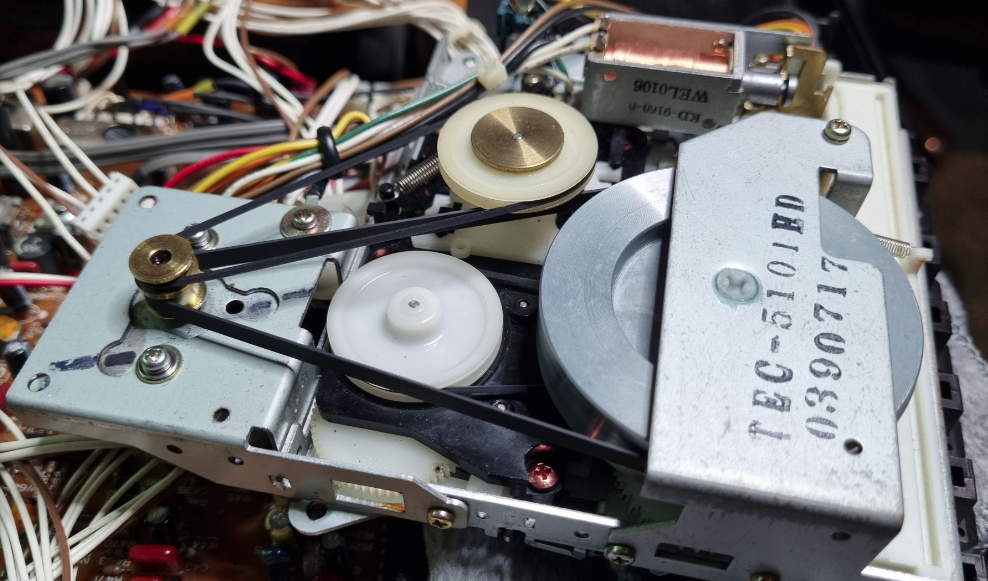
Found wild occasional speed variations without touching the pitch controls, and found the belt riding up the motor pulley. Found the motor had been removed and mounted on two washers which led to misalignment (and incorrect screws – too long – maybe why the washers added) – or possibly as a ‘fix’ to the bent chassis, who knows. Removed and fitted with proper length screws, belt now remains central to the crowned pulley.
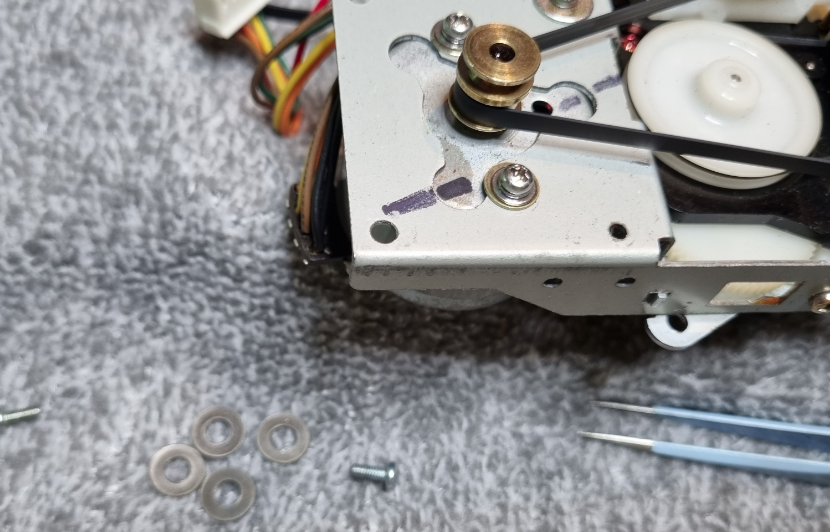
Idler tyre was replaced as was slipping on the takeup reel (meaning the takeup torque clutch was not operating as expected):
Playback was very muffled, azimuth was way out of calibration. Roughly pulled into line by ear.
Phones volume pot very scratchy, but needs all the mixer panel and input jacks removed (lots of knobs!)
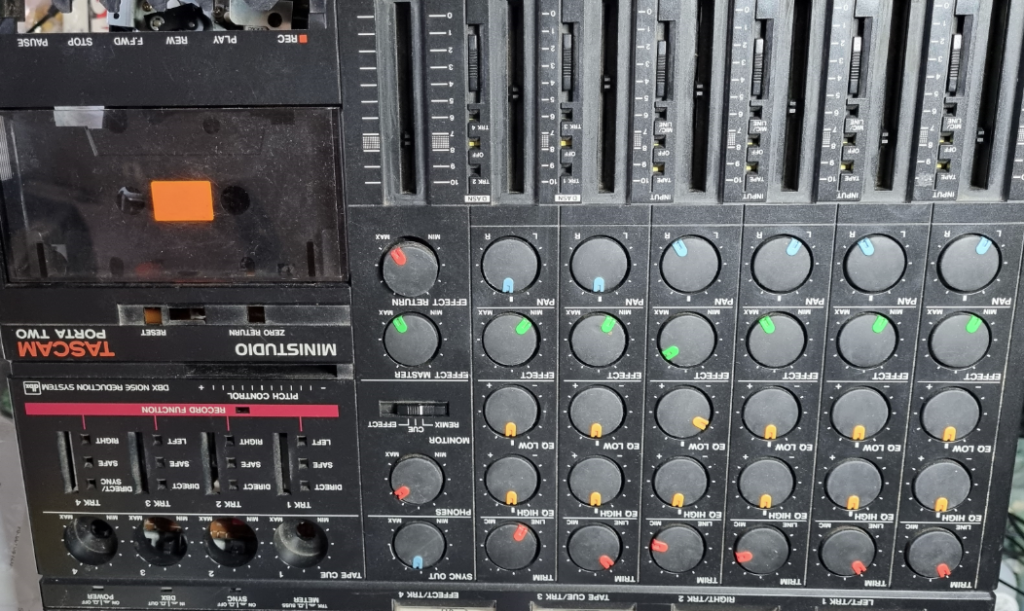
Mixer pots very sticky and hard to turn, volume faders gritty and sticky
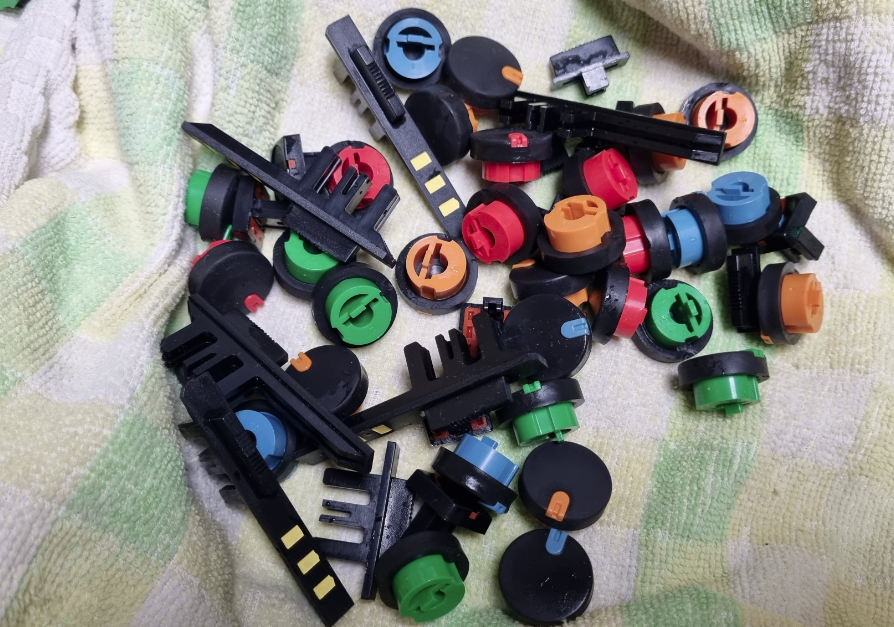
All knobs removed (not easy as mostly recessed and nothing to grab to, although pipe cleaner bent and slid underneath each worked well for a couple of really stiff ones). May as well clean them in the ultrasonic and the front panel whilst got the opportunity…
Fabricating a custom delicate repair to the pitch fader
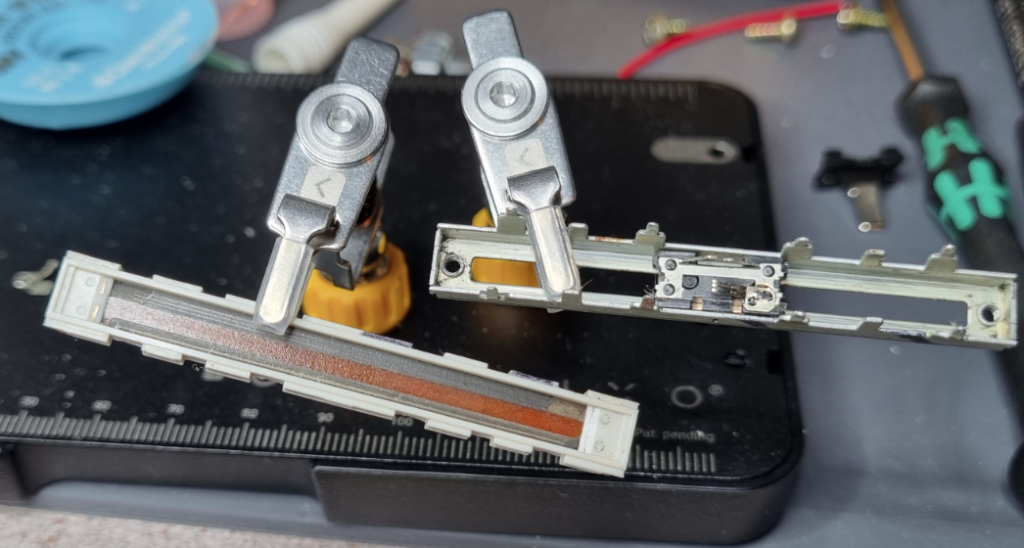
Disassembled one of the donor faders and cut off one of the spring contact sets, and transplanted to slider on original, regreased and cleaned up ok:
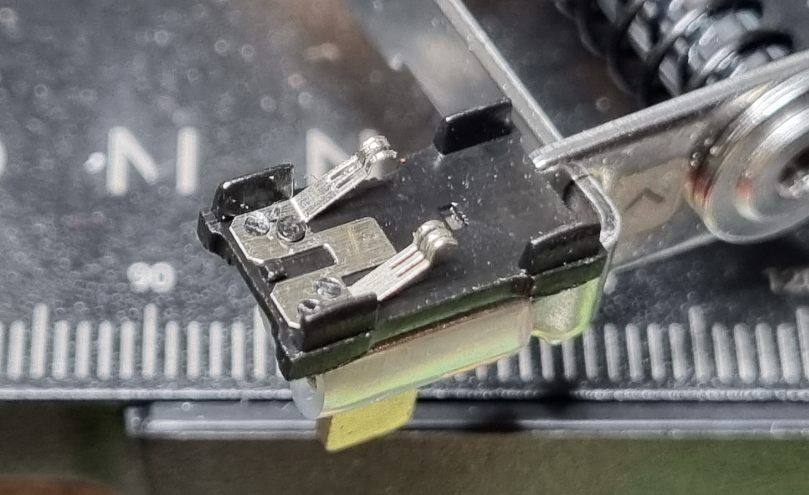
The donor contact was secured in place (after this photo, a bit more was needed trimming off the ‘width’ of the base of the contact where it was soldered so it fit in the base ok). Cleaned the tracks, and a trace amount of lubricant added via Deoxit F5 Fader and the slider plastic areas cleaned and regreased:
Snatchy fader cleaning and lubrication
All the faders were ‘gritty and sticky’, so they were desoldered and disassembled for cleaning out the dirt and muck, regreased sliding areas. They were much improved but not as good as a new replacement (but pretty much made of unobtainium now particularly 50K Log sliders of these dimensions). The contacts were showing signs of fragility, possibly corroded so may need further attention quite a bit down the road…
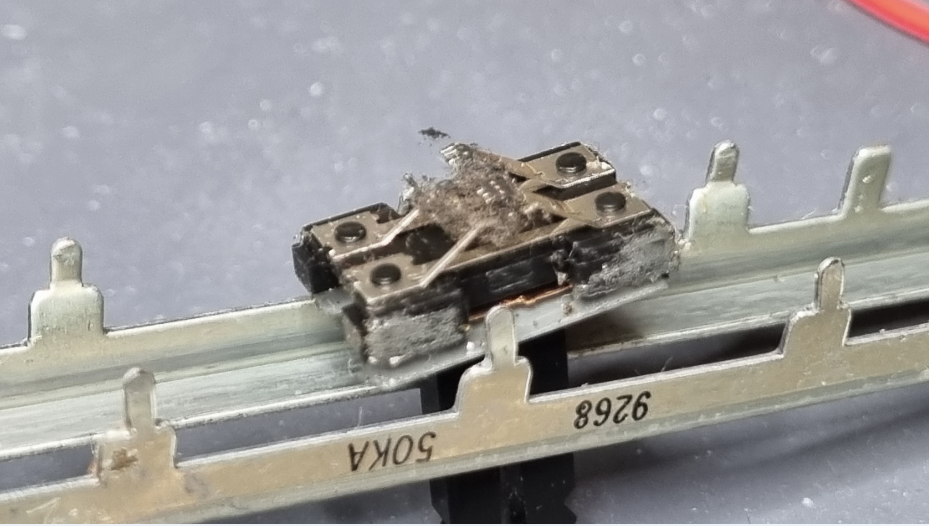
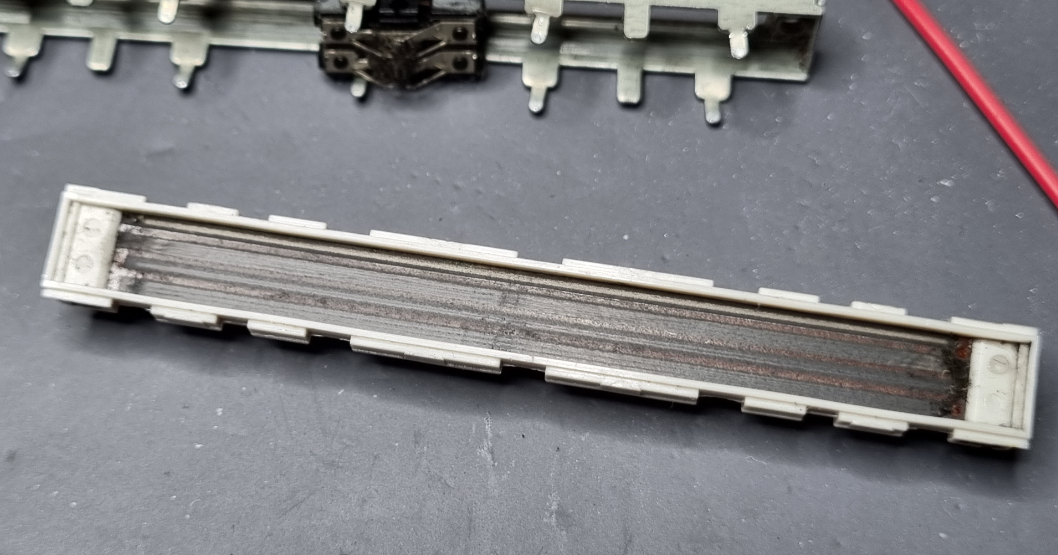
Removed headphones volume pot to clean as couldn’t get to contacts externally.
Removed bodged pitch control and re-fit the newly repaired fader.
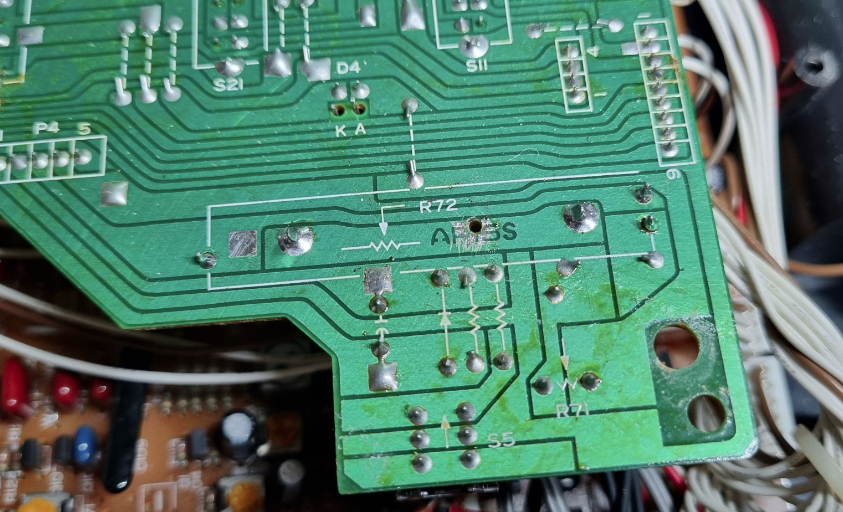
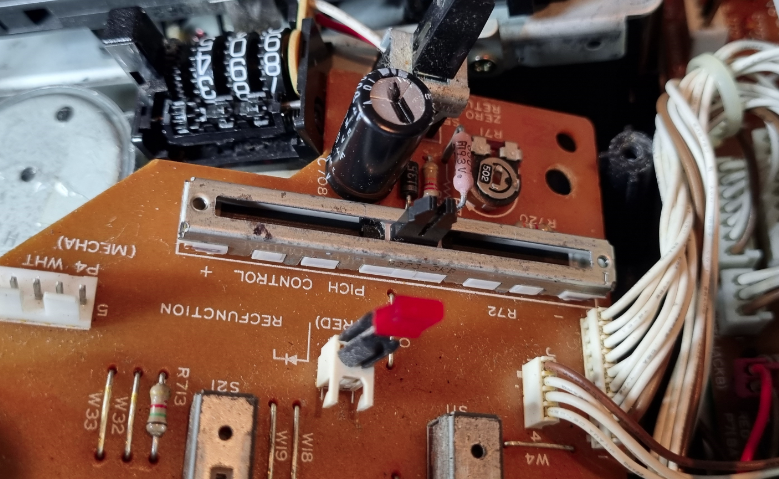
Worked on the sticky stiff mixer panel pots with some IPA and Naptha to help thin out and lubricate the shaft grease (disassembly being the only better option but that would take many hours for all 37 pots – the phones and effect master pots were of a different design and weren’t as stiff) – the midpoint clicks could now be felt easier on the EQ pots.
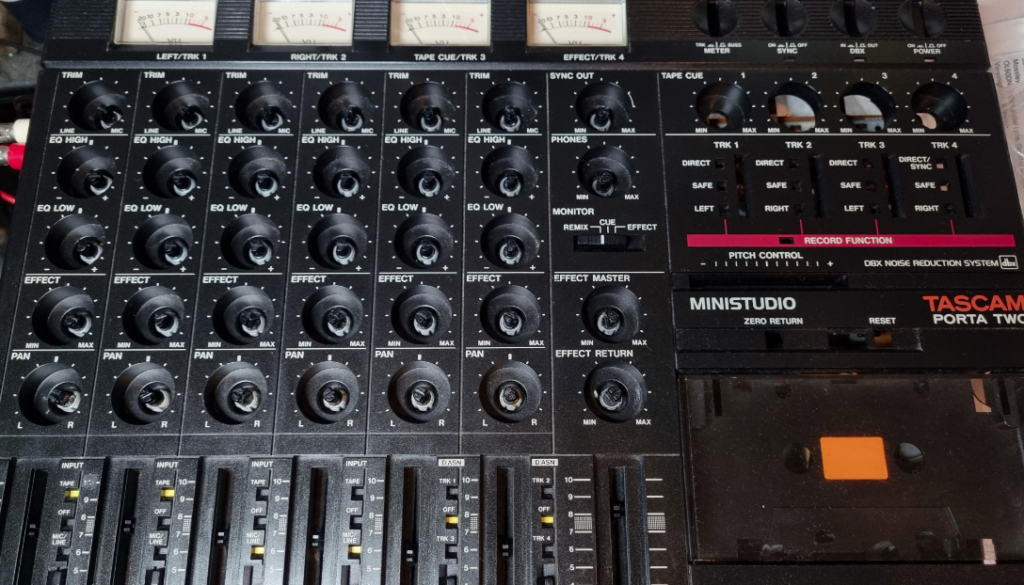
Case looking a bit cleaner too now:
Alignment process (Mechanical)
Capstan thrust play was too great at 1mm, plate was bent, reshaped and now 0.1mm (0.05-0.3mm)
Pinch roller pressure acceptable 350g (300-500g)
The take up torque was a bit strong and could also be a factor in W&F, so disassembled the reel bed to get to take up reel and cleaned clutch felt with IPA and fluffed up a bit where could, whilst in there I cleaned and lubricated other areas of the GEC transport, which otherwise was generally clean.
Final take up torque measured at 42g/cm (35-70g/cm), back tension 3g/cm (2-6g/cm)
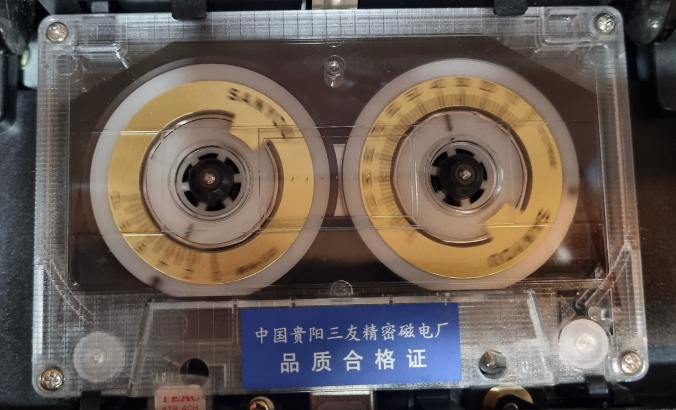
I have no present means to check FF/REW torque but was functionally fine and nothing to suggest any issues there (and no adjustments as such)
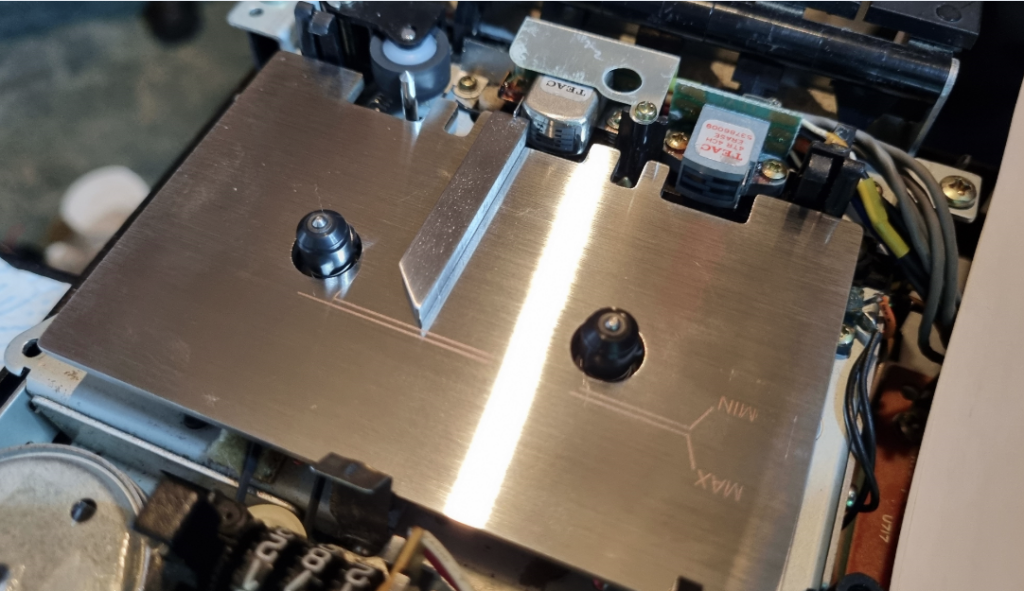
Tape head height was ok and path looked fine (tape height jig, can also verify head penetration, ooerr):
Azimuth was further adjusted at 400Hz coarse and 10kHz fine with full-track alignment tape (checked between Ch1+4 for max ‘distance’ across tape).
Pitch/speed adjusted to 3150Hz (+/- 45Hz spec), with pitch control centred.
Pitch deviation slider low-high was measured between 2640-3600 @3150Hz (2510-3420 at 3000Hz), spec 2600-3400 at 3000, so good range.
W&F measured at best 0.08% 0.12% peak (0.15% spec), but I felt better could be achieved as it could still vary somewhat (capstan belt).
Alignment process (Electronic)
Initial level setting and measurements of mixer ok
Adjustments (each of 4 channels):
VU meters trimmed
PB Frequency response at -10dB varied from -9.9 to -10.4 (so within +0.1 / -0.4dB, spec +1dB/-2dB)
FX return and EQ response all good
PB level adjusted
PB Freq response adjusted
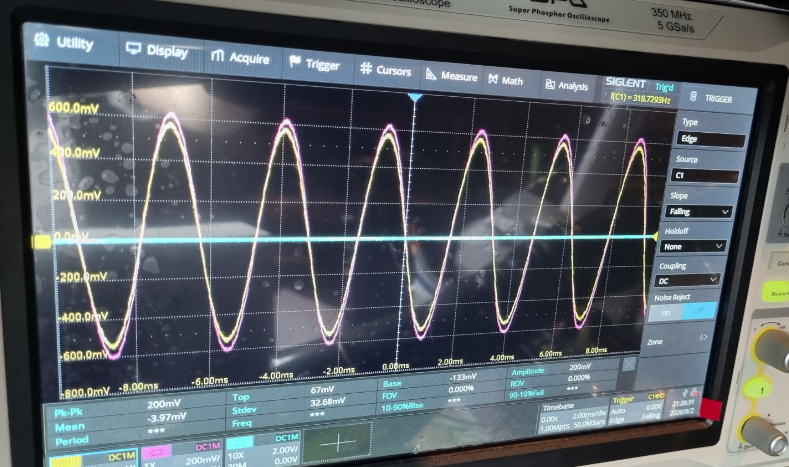
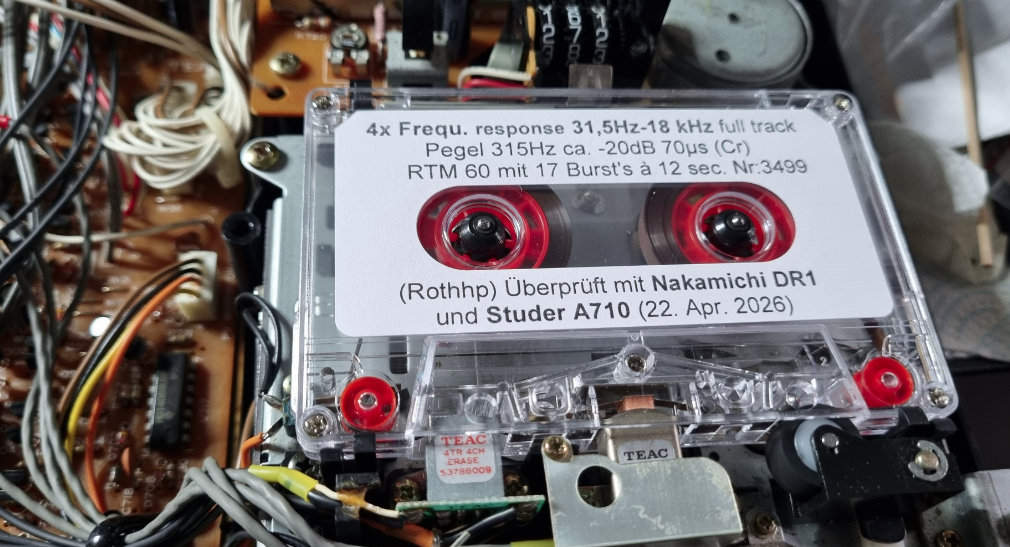
Dbx time adjustment ok
Bias oscillator was slightly down at 59.73KHz, trimmed back to 60.00KHz
Bias amp tuning adjusted down from 0.18 to a 0.15mV minimum ‘null’ point (spec < 0.25mV)
PB bias trap tuned for bias leakage to minimum
Bias trap of record amp – hit a snag here as there was too much bias leakage past the trap, and caused a lot of work and grief.
The “record amp bias trap” trap!
I could see a massive 400mV+ bias leakage on the output of the Rec amps (even when isolated from trap – so bias frequency was actually being fed into the Rec amp), so swapped out op-amps (in case of internal leakage), caps, added some adjustments and additional filtering in the op amp feedback, but nothing changed 🙁
Also removed and checked the LC filters were functioning externally ok, but just could not get a null minimum point on the filters in circuit.
After a lot of wild goose chasing red herrings down a rabbit hole, it turned out the leakage interference was being radiated from the rec amp muting circuit wires picking up bias field from the bias voltage trimmer caps! This then leaked through the ‘open’ (unmuted rec amp) transistor B-C directly to the rec amp non-inverted input!
Added 10nF caps across R154/254/354/454 at the muting transistor end of the wires (as this is just a DC mute on/off signal, the cap basically shorted any induced HF to ground) and also added temporary shielding around C148 trimmer cap to eventually find the null and obtain a minimum leakage of around 35mV at the trap junction with op amp output. It worked but wasn’t pretty!
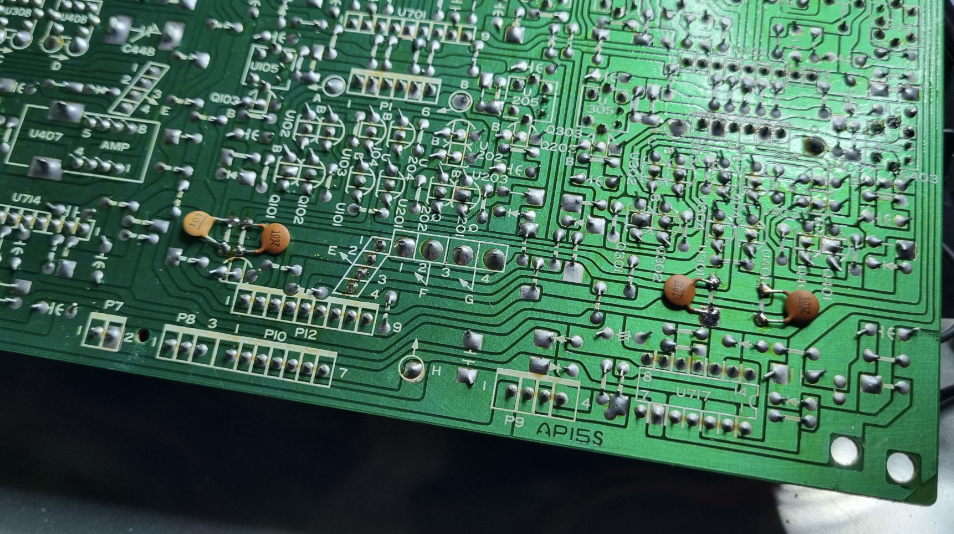
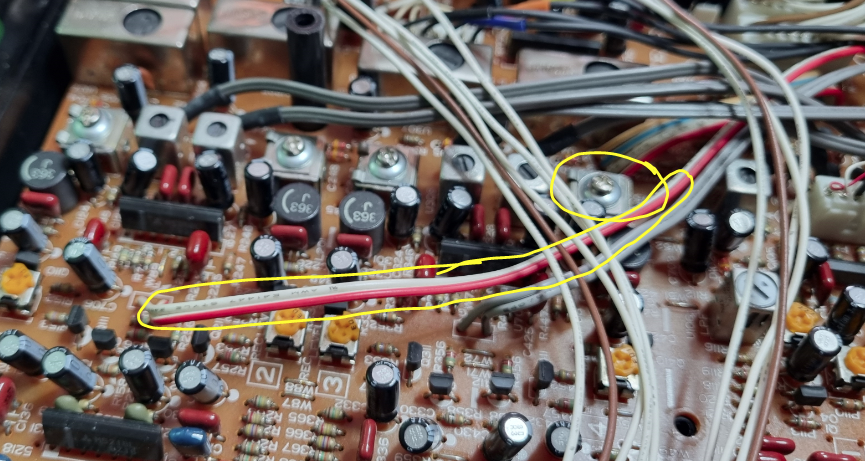
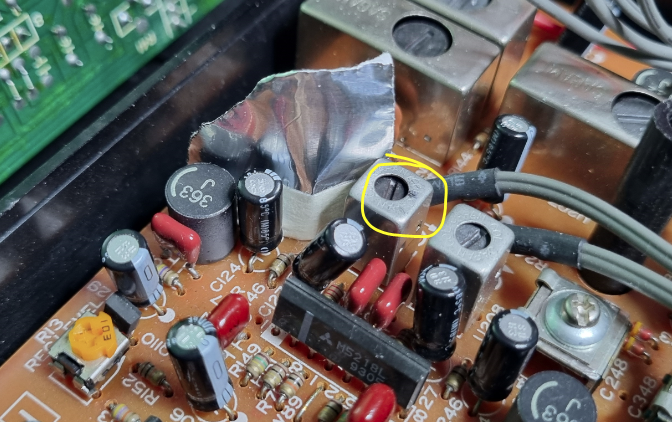
Bias Voltage was then adjusted for equal response between 400Hz + 10KHz recording on each channel.
Record levels adjusted and PB of recorded signal was pretty much indistinguishable from source.
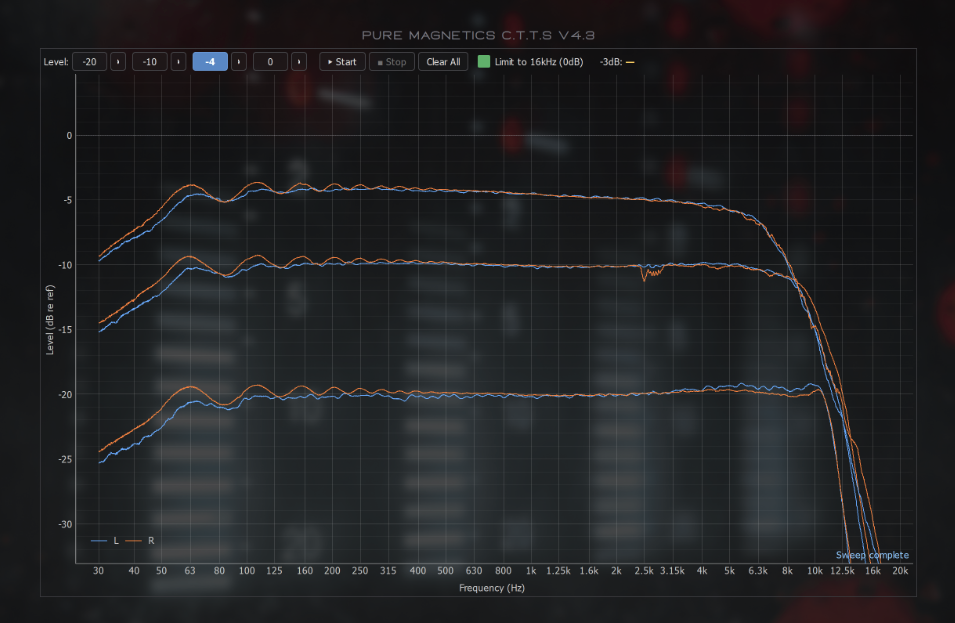
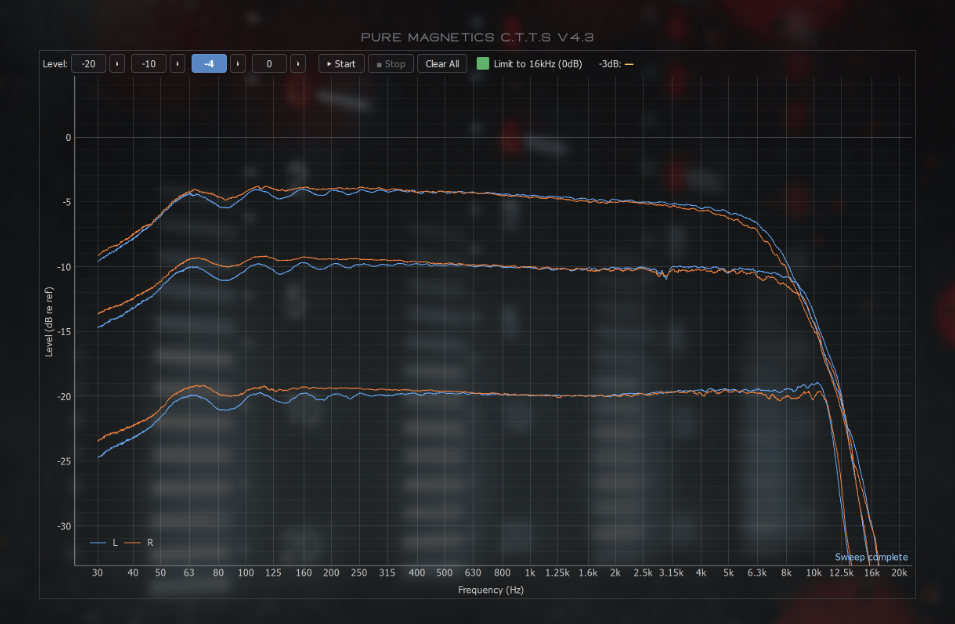
Overall Frequency Response checked and was within 1dB across all 4Ch up to 10KHz at -20dB input (spec +3 high / -3dB low) – see below for PM-CTTS charts!
Distortion measured at 0.4% max (0.4, 0.1, 0.1, 0.3 for the 4 channels respectively)
S/N ratio 45/46/46/46dB (spec is higher than 43dB)
Erasing performance excellent
Crosstalk ok
Recording crosstalk (Record leakage to PB output of adjacent channels) – all ok (less than 0dB metered on adjacent PB channel at 10kHz)
Sync signal checked at -4dB (-3.9 to -4.7dB Freq response 300 to 3KHz – spec +/- 3dB).
Still wasn’t happy with W&F issues – mainly around 4Hz (confirmed later with PM-CTTS) which is about the running length of the capstan belt, so another new belt was ordered from Decktech.
Replaced belt and also a new brass shafted pinch roller arrived so fitted that too, belt and braces!
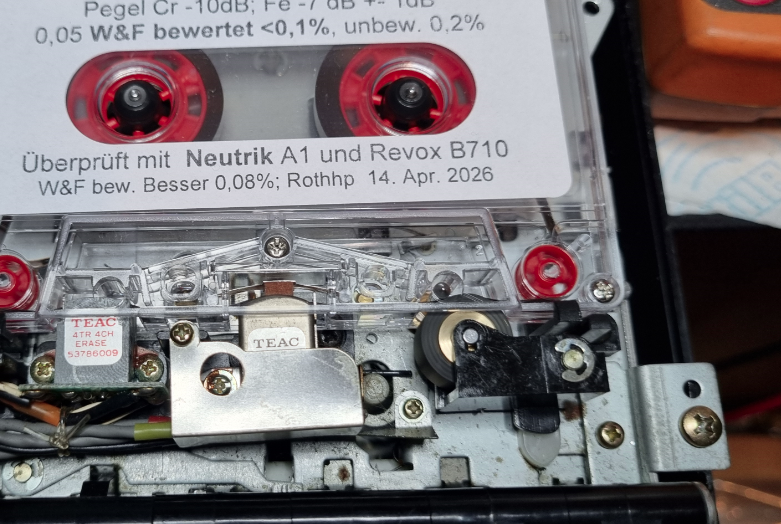
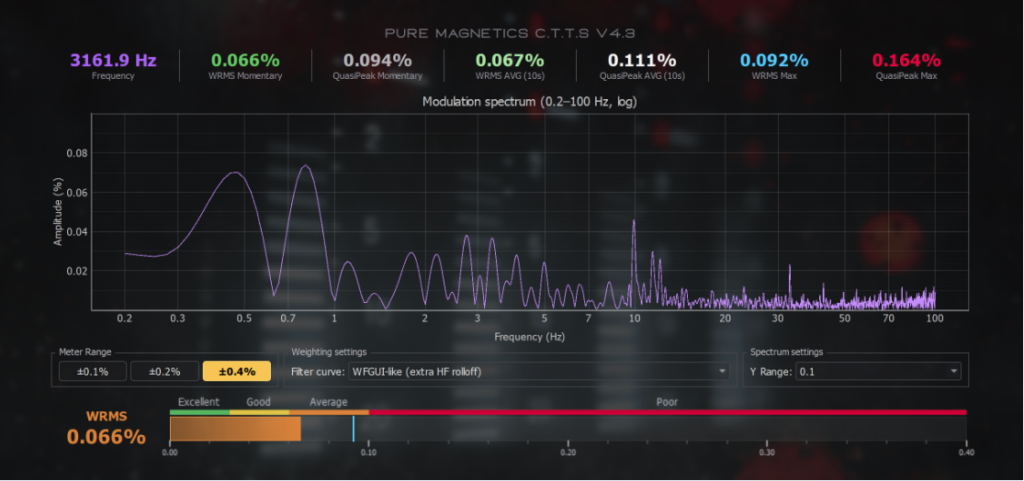
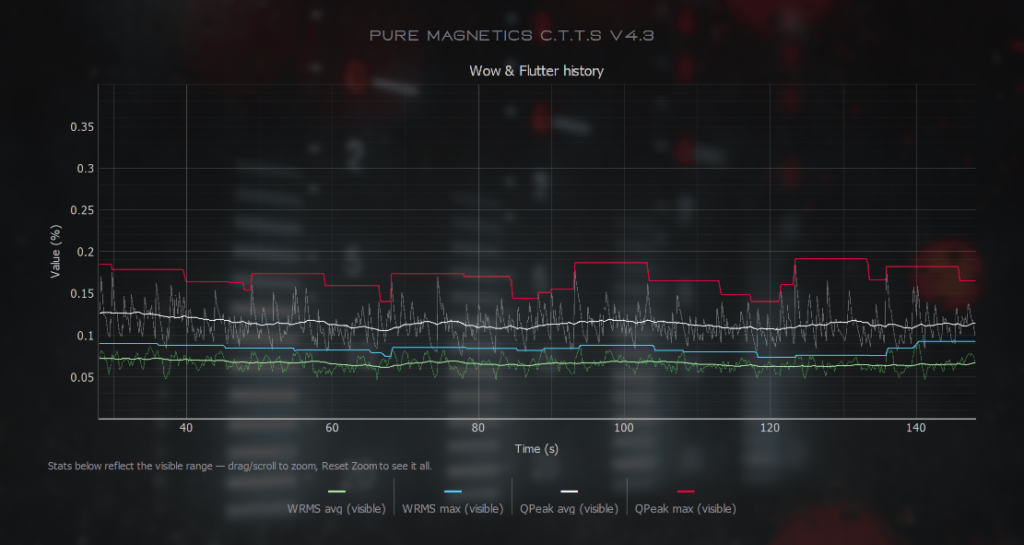
Got some new software – PM-CTTS (see also the repair on the Fostex R8) – and verified W&F and frequency response curves, truly excellent software, thoroughly recommended!
Q Peak average 0.11% (spec is 0.15%) – couple of peaks around 0.5/0.9/10Hz but it’s a massive improvement overall and we have to call it a day some time 🙂
Frequency response graphs:
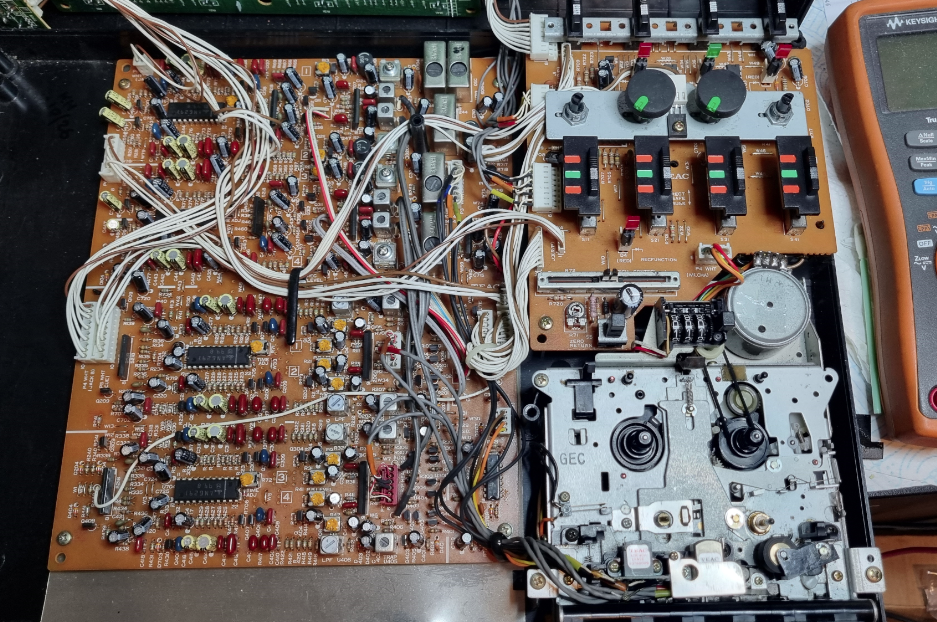
Internals prior to closing up the lid for the last time:
Final recording/playback tests to tape with and without dbx were excellent across all 4 channels.
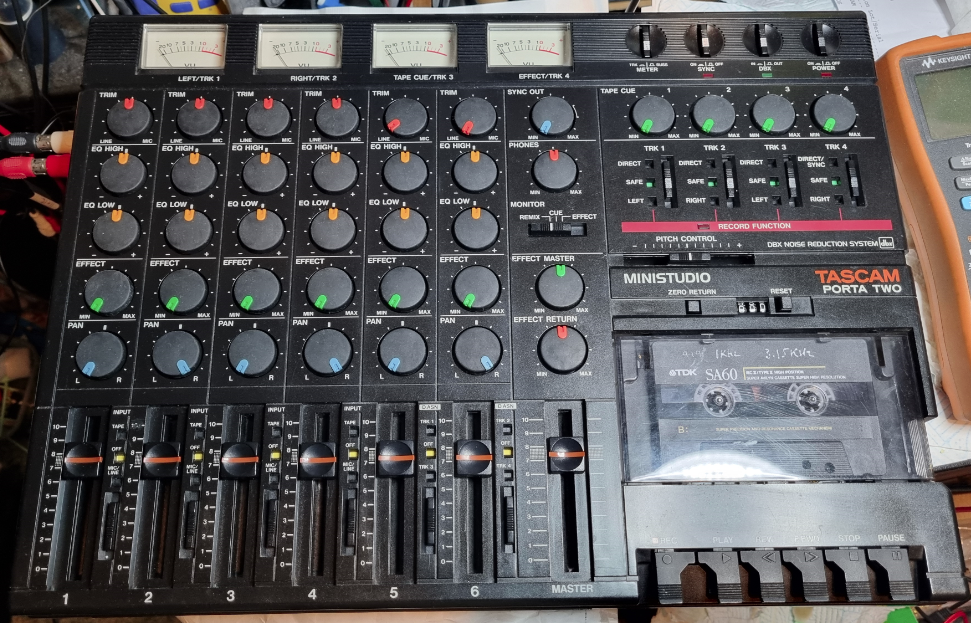
Nice! 🙂
See this Tascam 414 common issue and service.
View the full index of Tascam recorder repairs and services or more Reel to Reel servicing